
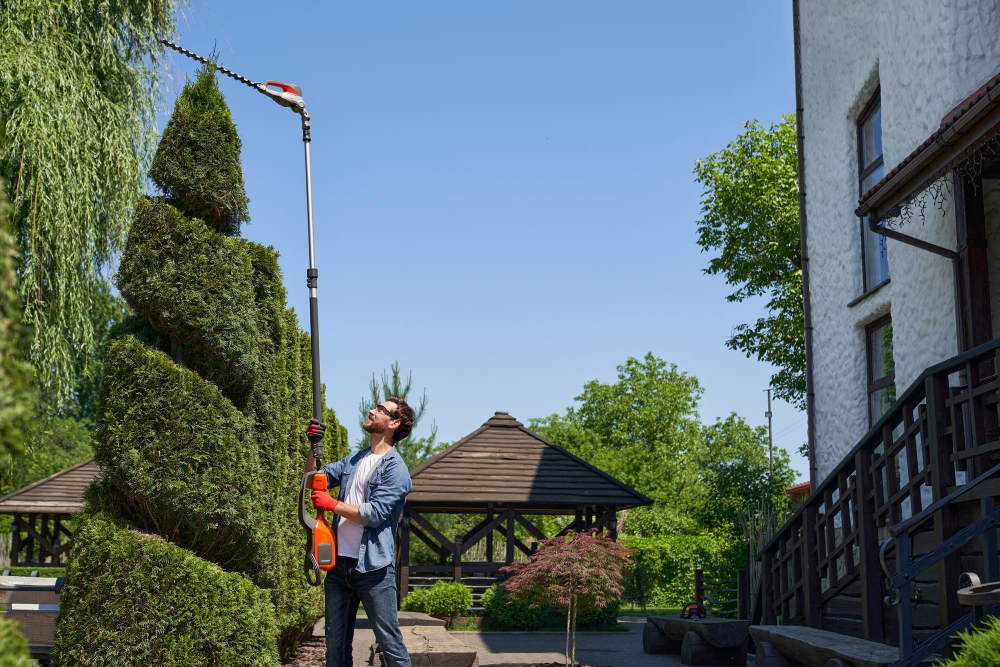
For years, the standard practice across Fairhope was to have the same crew that handled lawn care also handle the trees. They were already on the property, they had a truck and some tools, and adding tree work to the bill seemed like the easy choice. Over the past several years, though, more homeowners have been moving away from this arrangement and hiring specialized tree pruning services for the tree work specifically.
The shift is not just about preference. It is about results, and the difference shows up clearly once you know what to look for.
What Lawn Crews Actually Do With Trees
A lawn crew that handles trees on the side is generally not trained in arboriculture. They have a chainsaw, they know how to climb a ladder, and they can take branches off. The work gets done, and from a distance the tree looks fine.
The problems show up over time, and they tend to show up in patterns.
The Generic Trim
Lawn crews approach pruning the same way they approach mowing. The goal is uniformity. Branches that hang low get cut off. Branches that look out of place get removed. The tree ends up looking like it had a haircut.
This works for hedges. It does not work for trees. Trees have species-specific growth patterns, structural requirements, and biological responses to pruning. A water oak does not respond to pruning the same way a live oak does. A pine does not respond the way an ornamental does. Treating them all the same way produces predictable damage.
Wrong Cuts in the Wrong Places
The most common issue is incorrect cut placement. Stub cuts that leave dead wood attached to the trunk. Flush cuts that remove the branch collar. Tearing cuts where heavy limbs were not properly notched and ripped a strip of bark down the trunk on the way down.
Each of these creates an entry point for decay. The damage is not visible right away. It shows up five to ten years later, when the tree starts dying back, developing cavities, or losing structural integrity.
Wrong Timing
Live oaks should not be heavily pruned during the warmer months because of oak wilt risk. The fungal disease is spread by sap beetles attracted to fresh pruning wounds, and the highest risk period is spring and early summer. A lawn crew that prunes live oaks in May because that is when they happened to be on the property has just exposed the tree to a disease that kills live oaks across the South every year.
Most lawn crews do not know this. The pruning happens, the bill gets paid, and either the tree gets infected or it does not. The homeowner has no way to connect a tree dying three years later back to the pruning that compromised it.
What Specialized Tree Services Do Differently
A pruning service that focuses specifically on trees brings a different approach to the work.
Species-Specific Decisions
The first thing a specialized crew does is identify what they are working on. Live oak, water oak, pine, sweet gum, magnolia, ornamental species. Each one has its own pruning calendar, its own structural considerations, and its own response patterns.
The pruning plan reflects the species. Live oaks get pruned in the dormant months. Water oaks get structural pruning when they are young to address codominant stems. Pines get minimal live wood removal. The cuts that get made on each species are matched to what the species can handle.
Proper Cut Placement
Specialized crews are trained on cut placement. The cuts are made just outside the branch collar, sized appropriately, and made with the correct technique to avoid bark tearing on heavier limbs. The three-cut method, where an undercut and a relief cut are made before the final cut, prevents the kind of tearing damage that lawn crews routinely cause on large branches.
Volume Control
Trees can only handle so much pruning in a season before the loss of foliage starts stressing the tree. Specialized crews track total live wood removal across the entire pruning job and stop before the tree gets over-pruned. Lawn crews tend to keep cutting until the tree looks the way they want it to look, regardless of how much is coming off.
Long-Term Plan
A specialized service usually thinks about the tree across multiple pruning cycles, not just the current visit. Structural issues get corrected over two or three years. Reduction work gets staged so the tree has time to respond between visits. The plan is set up to keep the tree healthy and structurally sound across decades, not just to make it look right this week.
Why the Shift Matters in Fairhope
Fairhope properties carry significant tree investments. A mature live oak adds real value to a property and takes a hundred years to grow. The cost of replacing one is enormous if the tree even can be replaced in any reasonable timeframe.
Homeowners who have lost trees to bad pruning, or who have watched trees on neighboring properties decline after lawn crew pruning, are connecting the pattern and making different choices. The pruning service costs more upfront than adding it to a lawn bill. The cost difference is small compared to losing a major tree on the property because someone made the wrong cuts.
The trees that have been pruned correctly for years look noticeably different from the ones that have not. That is the whole reason the shift is happening.