
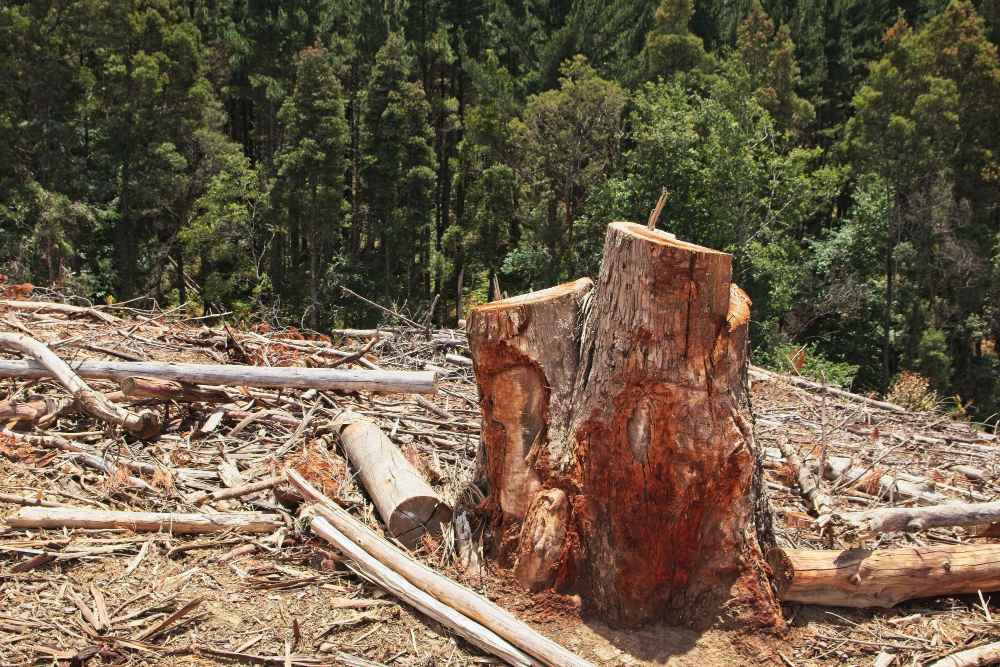
Most homeowners assume a stump in the yard is going to rot away on its own within a few years if they just leave it alone. The thinking goes that wood plus moisture plus time equals decomposition, and eventually the problem solves itself. In Fairhope, that assumption falls apart pretty quickly.
Coastal stumps in this part of Baldwin County actually decay slower than people expect, not faster. The reasons have to do with the specific conditions on the Eastern Shore, and the slow decay creates a longer window for the stump to cause problems on the property than most homeowners realize when they decide to leave one alone.
What Actually Affects How Fast a Stump Breaks Down
Stump decay is a biological process driven by fungi and microorganisms that need specific conditions to do their work. The conditions in Fairhope are not as favorable to fast decay as people assume.
Moisture Levels Matter More Than Rainfall Totals
Fairhope gets plenty of rain over the course of a year. The total rainfall is well above the national average, which seems like it should accelerate stump decay. The problem is how the moisture moves through the soil.
Sandy coastal soil drains fast. Rain hits the ground, soaks in briefly, and then keeps moving down through the sand. The stump and root system get wet, but they do not stay saturated the way they would in heavier clay soils that hold water longer. Decay fungi need consistently moist wood to thrive, and the wet-then-dry cycle of sandy soil slows that process down.
Heart Rot Versus Surface Rot
Hardwood stumps from species like live oak, water oak, and pecan have dense heartwood that resists decay strongly. The outer sapwood breaks down faster, which makes the stump look like it is rotting on the surface. Underneath, the heartwood can stay solid for ten or fifteen years.
Pine stumps decay differently because of resin content. Slash pines, longleaf pines, and loblolly pines all have heavy resin loads in the heartwood. The resin makes the wood resistant to fungal attack, and you can find pine stumps in old growth areas that have been on the ground for decades and are still mostly intact.
Soil Temperature Effects
Fungal activity slows down significantly during cooler months. Fairhope has mild winters compared to most of the country, but the ground still cools enough to slow decay for several months a year. Combined with the rest of the conditions, this stretches out the timeline further.
What This Means for the Property
A stump that takes ten years to break down is not just an aesthetic issue. It is an active site for problems that compound over time.
Termite & Carpenter Ant Activity
Subterranean termites are common across Baldwin County, and they treat a slowly decaying stump as a food source and nesting site. Once a colony establishes in the stump, scouts head out looking for additional food sources, and the closest wood is usually the framing of the house.
Carpenter ants follow a similar pattern. They prefer soft, moist wood for nesting, and a stump in the slow-decay phase fits their requirements completely. Once the colony is large, they expand outward into other wood structures on the property.
The longer the stump sits, the longer this risk window stays open. A fast-decaying stump might be food for a season or two. A slow-decaying coastal stump can host pests for a decade.
Settling & Surface Voids
As the root system breaks down underground, the soil above slowly fills the voids left behind. In sandy soil, this settling is uneven and unpredictable. You end up with depressions in the yard, sometimes years after the stump itself appears to be gone, that show up where major roots used to extend.
Walking surfaces, driveways, and patios near the stump can be affected by this settling if any of the root system extends underneath them.
Sprouting & Regrowth
Some Fairhope species send up sprouts from the stump and root system for years after the tree was cut down. Water oaks, sweet gums, and certain other hardwoods will keep producing new growth as long as the root system has any life left in it. Slow decay extends the regrowth period, which means more years of cutting back sprouts with a shovel and clippers.
What Removal Actually Solves
Grinding the stump down or excavating the root system shortcuts the entire timeline. Instead of waiting a decade for biology to handle the problem, the area becomes usable within days, the pest habitat is eliminated, and the regrowth potential is shut off.
For yards where the stump location matters, like areas planned for new construction, hardscaping, gardens, or replanting, removal is not really optional. Building or planting on a slow-decaying stump and root system creates problems that only show up after the work is done, when fixing them is significantly more expensive.
For yards where the stump is just sitting in an open area away from anything important, the calculation is different. Some homeowners choose to leave them. The cost of that decision is the slow timeline, the ongoing pest risk, and the eventual settling that comes when the underground wood finally breaks down.
Coastal stumps do not disappear quickly. Knowing that going in changes how the decision gets made, and most Fairhope homeowners who understand the timeline opt for grinding or full removal rather than waiting on a process that takes longer than they expected.