
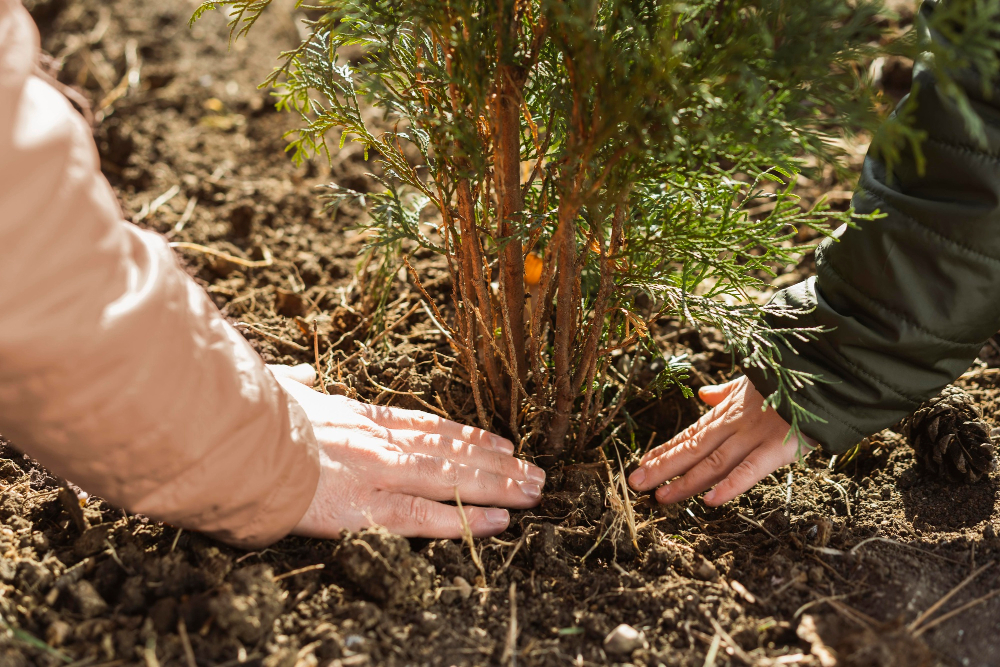
Planting a tree on the Eastern Shore looks like a weekend project until you walk into a nursery, see forty options, and realize half of them will not last more than a few seasons in Baldwin County soil. The phrase “right tree, right place” gets used a lot in arboriculture, and there is a reason for it. The trees that thrive here are the ones matched to the conditions on the lot. The ones that fail are usually fine trees that were put in the wrong spot.
This piece walks through how to pick a tree for coastal Alabama, where to put it, and what tree planting service work usually covers.
What makes coastal Alabama tough on trees
Baldwin County sits between Mobile Bay and the Gulf, and the conditions here are not what most national nursery guides assume.
Sandy soil
Most lots on this side of the bay sit on sandy, fast-draining soil. Water moves through it quickly, which means roots dry out faster than they would in clay or loam. It also means nutrients leach out, so the tree gets less from the ground than it would in a yard further north.
Salt air
Properties near the water deal with salt spray, salt-laden wind, and sometimes salt in the soil itself. Some species shrug it off. Others burn at the leaf edges, drop foliage early, and slowly decline over a few years.
Heat & humidity
Long summers with high humidity create conditions that some trees handle and others do not. Fungal issues, root rot in low spots, and heat stress in exposed yards are all part of life here.
Hurricanes
Any tree planted in Baldwin County has a hurricane in its future. Species with weak wood, shallow roots, or heavy lateral limbs come down more often than those with deep taproots and tight branch structure.
Picking the right tree for the right yard
Before looking at species, look at the spot.
What is above
Power lines, eaves, gutters, and existing tree canopies all set the ceiling for what can grow there. A tree that reaches 60 feet at maturity does not belong under a service line.
What is below
Septic fields, irrigation, gas lines, and water mains do not get along with big root systems. Call 811 before any planting that involves digging past the topsoil.
How much sun
Most yard trees want six hours or more of sun. Some understory species can handle less. Putting a sun-loving tree in a shaded back corner sets it up to be slow and weak from year one.
Soil & drainage
If the spot holds water after a rain, only species that handle wet feet will live there. If the spot dries out fast, the tree needs drought tolerance and a watering plan for the first two years.
Species that work here
A short list of trees that hold up well on the Eastern Shore.
Live oak
The signature tree of this part of the South. Slow to start, but once established it lives for centuries. Deep roots, strong wood, salt tolerance, and a wide canopy. Needs space.
Southern magnolia
Evergreen, salt tolerant, and adapted to coastal conditions. Drops a lot of leaves and large pods, so people either love it or wish they had picked something else.
Bald cypress
Handles wet ground better than almost any other tree on the list. Deciduous, with soft needles in the fall. A good pick for low spots that other species cannot handle.
Crape myrtle
A smaller tree that fits under power lines and in tight yards. Long bloom in summer. Salt tolerant and tough.
Sweetbay magnolia
Smaller than southern magnolia and handles wet soil. Native to the area and pulls in pollinators.
Trees to think twice about
Bradford pears, water oaks past a certain age, and some fast-growing imports all carry storm risk or short life spans on the Eastern Shore. Worth a second look before planting.
How a planting job usually goes
A planting service is not just dropping a tree in a hole.
Site walk
Before any digging, a good crew walks the spot, checks what is above and below ground, looks at drainage, and confirms the species fits the location.
Digging the hole
The hole should be two to three times as wide as the root ball and only as deep as the root ball itself. Holes that are too deep settle and bury the root flare, which slowly kills the tree.
Planting
The root ball goes in with the flare at or just above soil level. Burlap and wire baskets get cut back. Backfill is the native soil from the hole, not amended bagged soil, in most cases.
Mulch & water
A ring of mulch a few inches deep, kept off the trunk, helps hold moisture and keeps mowers away from the bark. A new tree needs steady watering for the first two summers, especially in sandy soil.
Staking, if needed
Most smaller trees do not need stakes. Larger ones in open, windy spots sometimes do, with the stakes coming off within a year.
What to expect after planting
The first two years are the make-or-break window. Watering matters more than fertilizer in this stretch. Most failed plantings on the Eastern Shore failed because the tree dried out in its second summer, not because of pests or disease.
A tree planted right, in the right spot, on Baldwin County soil will outlive the person who planted it. The work that goes into picking and placing it pays off for decades.