
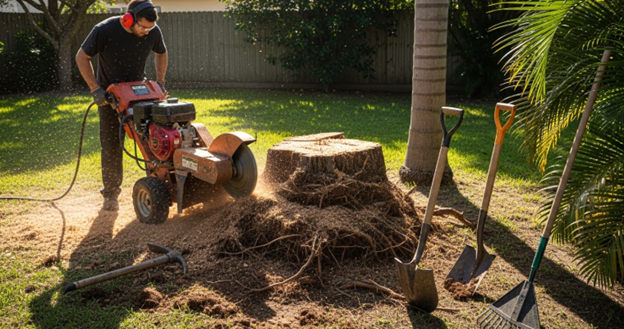
Removing a palm tree stump can seem like a daunting task, especially if the stump is large, fibrous, or located in a tight area. Whether you’re clearing your yard for landscaping, planting, or construction, knowing how to remove a palm tree stump efficiently and safely is crucial. In this guide, Spots Woods Tree Service breaks down every method, step, and tool you’ll need to tackle this task like a pro.
Quick Answer: How to Remove Palm Tree Stump?
For a quick solution:
- Manual removal is best for small stumps: dig around the roots, cut lateral roots, and leverage the stump out.
- Stump grinder is the fastest method for larger or stubborn stumps, grinding them 4–6 inches below ground level.
- Natural decomposition involves drilling holes in the stump and applying stump remover enzymes or keeping it moist to accelerate decay.
Key takeaway: The choice depends on the stump size, root density, location, and safety considerations. Large stumps or stumps near structures may require machinery or professional help.
Understanding Palm Tree Stump Removal
Why Palm Tree Stumps Are Harder to Remove
Palm tree stumps differ from traditional hardwood tree stumps:
- Fibrous root structure – Unlike oak or maple, palm roots are stringy and tough to cut with a regular axe.
- Stump size and trunk thickness – Some palms can grow 10–20 feet tall before being cut, leaving large stumps behind.
- Proximity to structures or utilities – Digging near a fence, power line, or garden pipe increases risk.
- Safety concerns – Manual removal can lead to injury if done incorrectly.
Tools & Equipment Needed for Palm Tree Stump Removal
Depending on the method, you may need:
- Manual tools: shovel, spade, mattock, pickaxe.
- Cutting tools: chainsaw, handsaw, or sawzall for fibrous roots.
- Machinery: stump grinder for large or stubborn stumps.
- Safety gear: gloves, goggles, steel-toed boots, and hearing protection if using power tools.
How to Remove Palm Tree Stump
Step 1 – Clear the Area
Remove debris, mulch, or loose soil around the stump. A clean area allows better visibility of roots and reduces tripping hazards.
Step 2 – Cut the Stump Low
Using a chainsaw or handsaw, cut the stump as close to the ground as possible. This minimizes leftover wood and makes removal easier.
Step 3 – Expose and Cut Roots
- Dig around the roots 4–6 inches down.
- Use an axe or mattock to cut through fibrous lateral roots.
- Ensure all major roots are severed before attempting to lift or grind.
Step 4 – Remove or Grind the Stump
- Manual removal: Pry out the stump with leverage using a crowbar or jack for small stumps.
- Stump grinder: For large stumps, grind the stump at least 4–6 inches below ground. This prevents regrowth and allows for landscaping.
Step 5 – Fill and Clean the Area
- Remove wood chips or leftover debris.
- Fill the hole with soil and level the ground.
- Optionally, plant grass, flowers, or a new tree in the cleared space.
Methods of Palm Tree Stump Removal
Manual Digging (Best for Small Stumps)
- Pros: Low cost, no machinery required.
- Cons: Labor-intensive, time-consuming, not suitable for large stumps.
Stump Grinder (Best for Large Stumps)
- Pros: Fast, effective, removes stump below grade, suitable for landscaping.
- Cons: Rental cost, requires careful handling, and safety precautions.
Chemical Decomposition
- Apply stump remover enzymes or chemicals to accelerate decay.
- Pros: Low effort, minimal physical labor.
- Cons: Takes weeks to months, not suitable for urgent removal.
Natural Decomposition
- Drill holes into the stump and keep it moist to encourage rot.
- Pros: Eco-friendly, no chemicals needed.
- Cons: Very slow process, unsuitable for high-traffic areas.
Palm Tree Stump Removal Methods
| Method | Cost | Time | Effort | Best For | Pros | Cons |
| Manual Digging | $50–$200 | Slow | High | Small stumps | Cheap, no machinery | Labor-intensive |
| Stump Grinder | $100–$400 rental | Fast | Medium | Large stumps | Effective, thorough | Rental cost, safety risk |
| Chemical Stump Remover | $20–$50 | Weeks | Low | Medium stumps | Low effort | Slow, chemicals |
| Natural Decomposition | $0 | Months | Low | Small-medium stumps | Eco-friendly | Very slow |
Safety Tips for Removing Palm Tree Stumps
- Always check for underground utilities before digging.
- Wear gloves, goggles, and sturdy boots to prevent injuries.
- Avoid DIY removal for very large or hazardous stumps.
- Use machinery according to manufacturer instructions and maintain a safe distance from the stump during grinding.
FAQs About How to Remove Palm Tree Stump
- How long does it take to remove a palm tree stump?
- Manual removal can take several hours; a stump grinder may take under an hour. Chemical methods take weeks to months.
- Can I remove a palm tree stump myself?
- Yes, for small stumps. Large stumps near structures should be handled by professionals.
- Do I need a stump grinder for every palm tree stump?
- Only for large or stubborn stumps. Small stumps can often be dug out manually.
- What is the cheapest way to remove a palm tree stump?
- Manual digging is the cheapest, followed by chemical or natural decomposition methods.
- Will chemicals damage my garden soil?
- Most stump removers are safe when used as directed, but always follow the instructions to avoid affecting nearby plants.
- How deep should I grind a palm tree stump?
- At least 4–6 inches below ground level to prevent regrowth.
- Is it necessary to remove all the roots?
- Removing major roots prevents regrowth and ensures a flat, safe yard.
- How do I prevent regrowth after stump removal?
- Grinding below grade and filling the hole with soil prevents sprouts from emerging.
Conclusion: Final Thoughts on Palm Tree Stump Removal
Removing a palm tree stump is a task that requires careful planning, the right tools, and a clear method. Small stumps can be handled manually, while larger or stubborn stumps benefit from a stump grinder. Optional chemical or natural decomposition methods provide alternatives for those seeking less labor-intensive options.
Key takeaway: Stump removal decisions depend on stump size, root density, location, and safety considerations. When in doubt, hire a professional arborist or tree removal service to avoid injury and ensure the job is done correctly.
Disclaimer: These methods and estimates are general guidelines. Actual effort, time, and costs vary depending on stump size, root density, and site conditions. Always follow safety protocols and local regulations.