
Short Answer
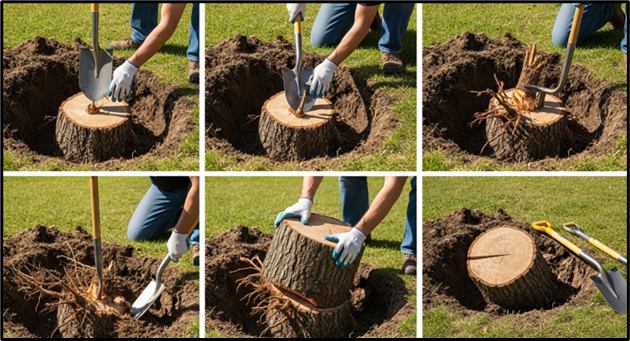
Removing a tree stump by hand involves digging around the stump, cutting exposed roots, and levering it out using tools like an axe, mattock, or pry bar. With proper preparation, safety gear, and patience, even stubborn stumps can be removed without heavy machinery, making it a cost-effective and eco-friendly DIY solution. For homeowners who prefer professional guidance or need expert advice, Spots Woods Tree Service can provide tips and support to ensure safe and effective stump removal.
Quick Summary / Key Takeaways
- Hand removal is low-cost and environmentally friendly
- Process involves digging, cutting roots, and levering the stump
- Essential tools: shovel, mattock, axe, pry bar, gloves, safety goggles
- Proper safety prevents injury and property damage
- Smaller stumps are easier; large or deep-rooted stumps require more effort
- Patience and consistent effort are key for success
Introduction
Leftover tree stumps can be unsightly, obstruct landscaping, and attract pests. Many homeowners search for how to remove a tree stump by hand to save money, avoid machinery, and achieve a sense of DIY accomplishment.
Hand removal offers a low-cost, eco-conscious alternative to stump grinders or chemical treatments, but it requires planning, effort, and safety precautions. This guide provides step-by-step instructions, recommended tools, expert tips, and troubleshooting advice to ensure a safe and effective removal process.
What Does It Mean to Remove a Tree Stump by Hand? (Core Definition Section)
- Definition: Manual excavation and extraction of a tree stump using hand tools like shovels, mattocks, axes, and pry bars.
- Difference vs machinery: Unlike stump grinders or chemical methods, hand removal relies on physical effort and basic tools.
- Benefits: DIY-friendly, minimal equipment, eco-conscious, avoids fuel consumption.
- Limitations: Labor-intensive, time-consuming, may require advanced effort for large or deep-rooted stumps.
Who Is This For?
- Homeowners with small to medium stumps
- DIY enthusiasts looking to save money
- Gardeners or landscapers preferring manual techniques
- Eco-conscious individuals avoiding machinery or chemicals
- Those with space constraints or small yards
How to Remove a Tree Stump by Hand
Step 1: Gather Tools and Safety Gear
- Shovel, mattock, axe, pruning saw, pry bar
- Gloves, safety goggles, steel-toe boots
- Optional: water for softening soil
Step 2: Clear the Area
- Remove debris and surrounding plants
- Expose the stump base and main roots
Step 3: Dig Around the Stump
- Create a trench 1–2 feet from the stump trunk
- Expose major roots for cutting
Step 4: Cut the Roots
- Use an axe or pruning saw for thick roots
- Smaller roots can be chopped or pried with a mattock
Step 5: Loosen and Lever the Stump
- Insert a pry bar under the stump
- Rock back and forth to loosen gradually
- Repeat cutting and levering until the stump is free
Step 6: Remove Remaining Roots and Soil
- Dig out leftover roots
- Fill the hole with soil and compact
Step 7: Optional Finishing
- Cover with mulch or plant grass
- Use wood preservative for exposed wood if repurposing
Tools and Materials Needed
- Shovel and spade
- Mattock or pickaxe
- Axe or pruning saw
- Pry bar or crowbar
- Gloves, steel-toe boots, safety goggles
- Water (optional for softening soil)
Hand Removal vs Alternative Methods
| Method | Difficulty | Cost | Time | Equipment Needed | Best For |
| Hand Removal | Medium | Low | 4–12 hrs | Shovel, axe, pry bar | Small-medium stumps |
| Stump Grinder (Mechanical) | Easy | Medium | 1–3 hrs | Grinder rental | Medium-large stumps |
| Chemical Stump Removal | Easy | Low | 2–8 weeks | Chemicals, drill | Slow, hands-off approach |
Common Mistakes When Removing Stumps by Hand
- Underestimating stump/root size
- Using inadequate tools or unsafe methods
- Ignoring safety precautions
- Leaving deep roots behind
- Skipping proper soil backfill
Pro Tips / Expert Insights
- Water soil a day before digging to soften it
- Start with small roots before tackling thicker ones
- Take breaks to avoid fatigue and injury
- Use wedges or levers for stubborn stumps
- Protect nearby plants or structures with boards or tarps
Latest Trends & Updates (2025–2026)
- Combining hand removal with eco-friendly chemical softeners for tough stumps
- Repurposing partially removed stumps into planters or garden art
- Urban gardening techniques for small backyards
- Ergonomic hand tools designed for efficiency and reduced strain
People Also Ask
- How do you remove a tree stump without a grinder?
- Can a tree stump be removed entirely by hand?
- How long does hand stump removal take?
- What tools do I need to remove a tree stump manually?
- Is hand removal safe for large stumps?
- Can I remove roots without damaging surrounding plants?
- How deep should I dig around the stump?
- What is the easiest way to remove a tree stump by hand?
FAQs
How to remove a tree stump by hand safely?
Follow proper digging, cutting, and levering steps with safety gear to prevent injury.
What tools are required?
Shovel, mattock, axe, pry bar, gloves, safety goggles, steel-toe boots.
Can large stumps be removed by hand?
Yes, but it’s labor-intensive. Professional assistance may be needed for very large stumps.
How long does hand stump removal take?
Depends on stump size: 4–12 hours for medium stumps.
Can roots grow back after hand removal?
If roots remain, sprouts may emerge. Remove major roots completely.
Is it eco-friendly to remove a stump by hand?
Yes, avoids fuel use and chemicals, making it environmentally conscious.
Can I repurpose the stump after removal?
Yes, leftover wood can be used for planters, garden art, or furniture.
Do I need professional help for hand removal?
Optional for very large or deep-rooted stumps; small-medium stumps are manageable DIY.
Conclusion
Removing a tree stump by hand is an affordable, eco-friendly, and rewarding DIY project. With the right preparation, tools, and patience, even stubborn small-to-medium stumps can be safely removed. Following this guide ensures effective extraction, prevents property damage, and opens opportunities for creative landscaping or repurposing.