
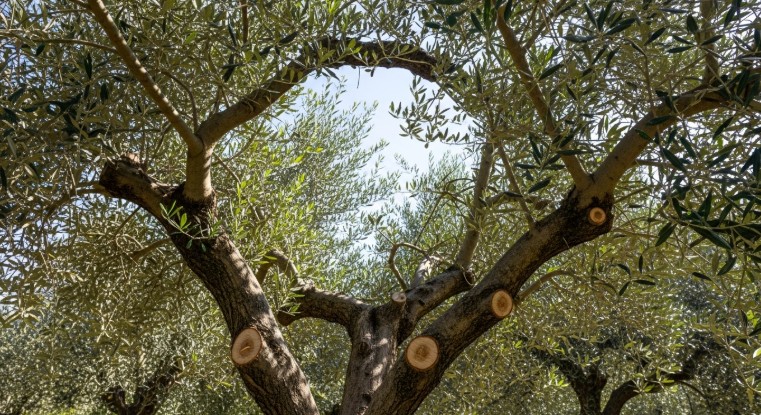
Short Answer (Immediate Guidance)
If you are searching how to prune an olive tree?, the main goal is to open the canopy for sunlight, remove dead or crossing branches, and maintain a balanced structure that supports healthy fruit production and long-term tree strength.
Olive trees respond best to light, annual pruning rather than heavy cutting. Over-pruning can reduce fruit yield and stress the tree for multiple seasons. For mature, overgrown, or unsafe trees, professional arborists like Spots Woods Tree Service ensure safe, structured pruning that protects both health and productivity.
What is Olive Tree Pruning and Why It Matters
What a how to prune an olive tree method involves
Olive tree pruning focuses on selective branch removal to:
- Improve sunlight penetration
- Remove dead or unproductive wood
- Shape a strong central structure
- Encourage fruiting branches
Why pruning improves fruit production and tree health
Proper pruning:
- Increases olive yield and quality
- Improves airflow and reduces disease risk
- Strengthens branch structure
- Prevents overcrowding and weak growth
Difference between pruning, trimming, and shaping
Pruning removes dead or unproductive branches, trimming controls light overgrowth, and shaping defines long-term canopy structure.
Common Olive Tree Problems That Require Pruning
Overgrown canopy blocking sunlight
Dense foliage reduces fruit production and weakens inner branches.
Dead or diseased branches
These can spread infection if not removed early.
Weak branch structure
Poor branch angles often break under fruit load or wind stress.
Pest and fungal infestations
Lack of airflow increases pest activity and disease risk.
Step-by-Step Guide: how to prune an olive tree?
Step 1 – Inspect tree structure
Identify dead, crossing, or weak branches before cutting.
Step 2 – Remove dead and diseased wood
Cut back to healthy tissue to prevent disease spread.
Step 3 – Thin overcrowded branches
Open canopy for better airflow and sunlight penetration.
Step 4 – Shape main framework
Maintain a balanced structure with well-spaced scaffold branches.
Step 5 – Reduce excessive height
Control upward growth for easier harvesting and stability.
Step 6 – Final cleanup and inspection
Ensure symmetry, health, and structural balance.
Tools & Equipment Used for Olive Tree Pruning
Hand pruners and bypass shears
Used for precise cuts on small branches.
Loppers for thicker branches
Provide leverage for medium-sized limbs.
Pole saws for higher branches
Allow safe cutting without climbing.
Safety gear
Gloves, goggles, and protective footwear reduce injury risk.
Professional arborist equipment
Rigging systems and climbing gear for large or mature olive trees.
Safety Considerations in Olive Tree Pruning
Ladder instability risks
Poor ladder use is a major cause of pruning injuries.
Over-pruning damage
Removing too much foliage reduces fruit production and stresses the tree.
Electrical hazards
Branches near power lines require professional handling.
Why DIY pruning can be risky
Incorrect cuts can permanently damage structure and reduce long-term productivity.
Cost Factors for Professional Olive Tree Pruning
Tree size and height
Larger trees require more time and equipment.
Level of overgrowth
Neglected trees need corrective pruning.
Accessibility
Tight spaces increase difficulty and labor.
Seasonal timing
Dormant-season pruning is more efficient and cost-effective.
Cleanup requirements
Debris removal and hauling increase total cost.
DIY vs Professional Pruning
| Factor | DIY Olive Tree Pruning | Professional Service (Spots Woods Tree Service) |
|---|---|---|
| Safety | Risk of injury | Fully safety-managed arborist work |
| Tree structure | Often unbalanced | Structurally precise pruning |
| Tools | Basic tools | Professional equipment |
| Fruit production | Inconsistent yield | Optimized olive production |
| Efficiency | Slow process | Fast and controlled |
| Long-term health | Risk of damage | Improved tree longevity |
Maintenance & Prevention Tips for Olive Trees
Annual light pruning
Maintains structure and supports consistent fruiting.
Soil and watering balance
Healthy roots improve resilience and fruit quality.
Prevent overcrowding early
Early shaping reduces need for heavy corrective pruning.
Pest and disease monitoring
Early detection prevents major structural damage.
When to Call a Professional Arborist
Trees too tall or unsafe to reach
Require climbing equipment and trained professionals.
Severe overgrowth
Needs corrective structural pruning.
Disease or damage
Decay or weak branches require expert evaluation.
Storm damage
Broken branches may hide internal structural weakness.
Precision shaping needed
Advanced pruning requires structured arborist planning.
At this stage, Spots Woods Tree Service can provide safe, professional pruning to restore structure and productivity.
FAQs About Olive Tree Pruning
When is the best time to prune an olive tree?
Late winter or early spring before active growth begins.
How much should I prune at once?
Around 20–30% of growth is recommended.
Can I prune olive trees heavily?
No, heavy pruning reduces fruit production.
What happens if I don’t prune?
Tree becomes overcrowded and less productive.
Do olive trees need annual pruning?
Yes, light yearly pruning is best.
Can pruning increase olive yield?
Yes, it improves sunlight and airflow.
Do professionals use special methods?
Yes, structured pruning techniques are used.