
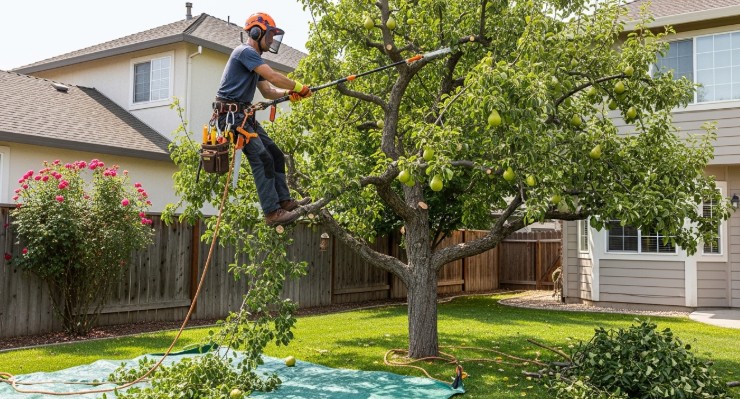
If you’re asking how to prune a pear tree, the most important rule is timing and structure. Prune during late winter while the tree is dormant, and focus on removing dead, diseased, crossing, or overcrowded branches. This improves airflow, strengthens structure, and boosts fruit production.
Proper pruning is not just about appearance, it directly impacts safety and long-term tree health. Poorly maintained pear trees can develop weak limbs that split under fruit weight or storm pressure. For homeowners unsure about technique or safety risks, professional arborists like Spots Woods Tree Service provide precise pruning that ensures healthy growth and reduces structural hazards.
What is Pear Tree Pruning and Why It Matters
Definition of pear tree pruning
Pear tree pruning is the selective removal of branches to improve tree structure, encourage healthy fruit production, and eliminate weak or hazardous growth.
Why pruning improves fruit quality and tree structure
Without pruning, pear trees become dense and unbalanced. This reduces sunlight penetration, weakens fruit development, and increases the risk of limb breakage during storms.
Difference between pruning, trimming, and shaping
- Pruning: Health-focused removal of specific branches
- Trimming: General size control and appearance maintenance
- Shaping: Aesthetic structuring of canopy growth
Each serves a purpose, but pruning is the most critical for long-term tree stability.
Common Problems That Make Pear Tree Pruning Necessary
Overgrown canopy and poor sunlight penetration
Dense foliage blocks sunlight, leading to weak fruit development and increased disease risk.
Dead, diseased, or broken branches
These branches pose a serious safety risk and can fall unexpectedly—especially during storms.
Weak branch angles prone to splitting
Pear trees often develop narrow branch unions that fail under heavy fruit load or wind stress.
Pest and fungal infestations in dense foliage
Poor airflow encourages fungal growth and insect infestations that weaken the tree internally.
Step-by-Step Guide: how to prune a pear tree?
Step 1 – Inspect the tree structure
Identify dead, weak, or crossing branches before making any cuts. Look for imbalance in canopy shape or signs of disease.
Step 2 – Remove dead and diseased wood
Cut back to healthy tissue using clean tools. This prevents decay from spreading deeper into the tree.
Step 3 – Thin overcrowded branches
Improve airflow and sunlight penetration. This step is critical for reducing fungal growth and improving fruit size.
Step 4 – Shape the central leader
Maintain a strong main trunk (central leader system) to ensure structural balance and long-term stability.
Step 5 – Shorten overly long branches
Reduce excessive length to encourage fruiting spurs and prevent limb breakage under weight.
Step 6 – Clean up and monitor regrowth
Remove debris and monitor healing. Healthy regrowth should be balanced and not overly dense.
Tools & Equipment Used for Pear Tree Pruning
Hand pruners and bypass shears
Used for small branches and precise cuts.
Loppers for medium branches
Ideal for thicker limbs that require more leverage.
Pole saws for higher limbs
Allow safe cutting of elevated branches without climbing.
Safety gloves, goggles, and ladders
Essential for injury prevention during DIY work.
Professional arborist climbing and rigging gear
Used by experts for high-risk pruning, especially near structures or power lines.
Safety Considerations in Pear Tree Pruning
Avoiding ladder accidents during pruning
One of the most common homeowner injuries comes from unstable ladder use on uneven ground.
Preventing over-cutting and tree stress
Removing too many branches at once can shock the tree and reduce fruit production for years.
Electrical line awareness near trees
Branches near power lines should only be handled by professionals due to electrocution risk.
Why improper cuts can permanently damage trees
Incorrect pruning cuts can lead to decay, weak regrowth, and long-term instability.
Risks of DIY pruning without arborist training
Without training, homeowners often misjudge branch weight, fall direction, and structural balance.
Cost Factors of Professional Pear Tree Pruning
Tree height and size
Larger trees require more labor, equipment, and safety measures.
Condition and level of overgrowth
Neglected trees cost more due to corrective pruning needs.
Accessibility of branches
Trees near buildings, fences, or tight spaces increase complexity.
Seasonal timing (routine vs emergency pruning)
Routine pruning is cheaper than emergency tree service after storm damage.
Additional cleanup or shaping services
Debris removal or advanced shaping may increase total service cost.
DIY vs Professional Pruning
| Factor | DIY Pear Tree Pruning | Professional Service (Spots Woods Tree Service) |
|---|---|---|
| Safety | Risk of falls and injury | Fully safety-managed arborist work |
| Tree health | Risk of incorrect cuts | Expert structural pruning techniques |
| Tools | Basic garden tools | Professional-grade arborist equipment |
| Results | Inconsistent shape & yield | Optimized fruit production & structure |
| Efficiency | Time-consuming | Fast and precise |
| Long-term impact | Possible tree damage | Improved long-term tree health |
Maintenance & Prevention Tips for Pear Trees
Annual dormant season pruning schedule
Prune every winter to maintain structure and avoid overcrowding.
Proper watering and soil nutrition
Healthy soil improves resistance to disease and supports strong fruit growth.
Preventing branch overcrowding early
Early training reduces the need for heavy corrective pruning later.
Monitoring for pests and fungal growth
Watch for leaf spots, unusual growths, or hollow branches.
Supporting young trees with structural training
Early pruning helps establish a strong central leader system.
When to Call a Professional Arborist
Trees too tall or unsafe to climb
Height and instability increase risk significantly.
Severe overgrowth or neglected trees
Heavily overgrown trees require corrective structural pruning.
Signs of disease or structural weakness
Cracks, decay, or leaning indicate serious risk.
After storm damage or broken limbs
Storm damage can weaken internal structure even if the tree looks stable.
When precise fruit production shaping is needed
Advanced pruning for yield optimization should be handled by experts.
At this stage, Spots Woods Tree Service can provide expert pruning to restore tree health, improve structure, and ensure safe maintenance.
FAQs About Pear Tree Pruning
When is the best time to prune a pear tree?
Late winter during dormancy is ideal for structure and recovery.
How much can I prune a pear tree at once?
Generally, avoid removing more than 25–30% of the canopy at one time.
What happens if I don’t prune my pear tree?
It becomes overgrown, weak, and produces lower-quality fruit.
Can over-pruning kill a pear tree?
Yes, excessive cutting can stress or permanently damage the tree.
Do pear trees need pruning every year?
Yes, annual pruning is recommended for health and productivity.
What tools are best for beginners?
Hand pruners, loppers, and a safe ladder setup.
How do I know which branches to remove?
Start with dead, crossing, and inward-growing branches.
Is professional pruning worth it for fruit trees?
Yes, especially for mature trees where structure and safety are critical.