
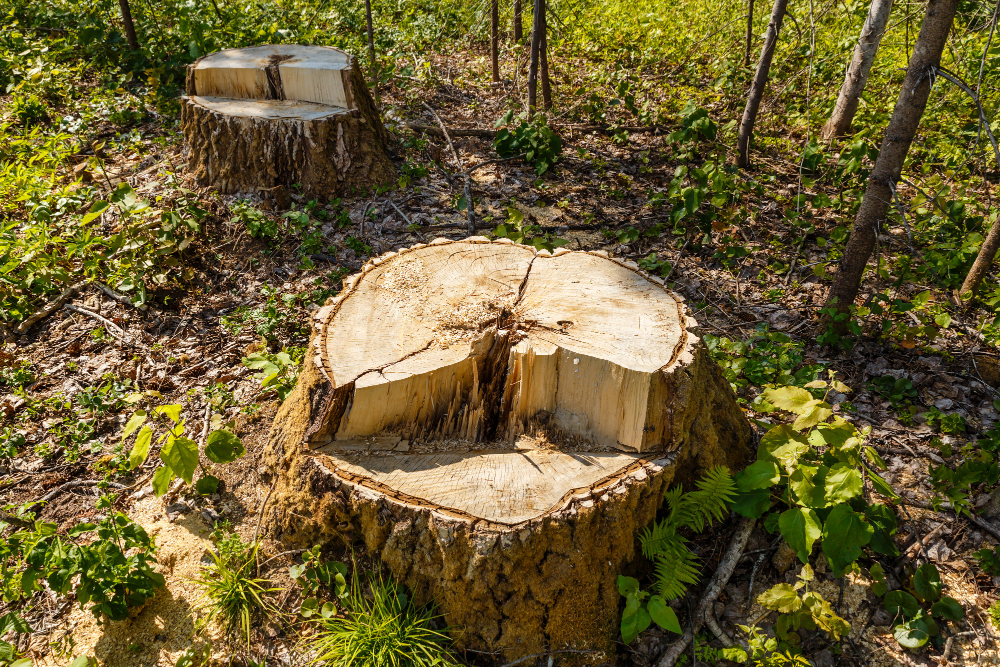
Once a tree comes down, the stump left behind is not something most Fairhope homeowners want to think about for long. It sits there, takes up space, attracts termites, and slowly starts to rot in a way that makes the surrounding soil soft and uneven. The question that comes up next is what to actually do with it. Grind it down, or pull the whole root system out.
Both options solve the stump problem, but they solve different versions of it. Picking the wrong one can waste money, damage your yard, or leave you with issues that show up years later.
What Grinding Actually Does
Stump grinding uses a machine with a rotating cutting wheel that chews the stump down to below ground level, usually somewhere between four and twelve inches deep. The wood gets reduced to shavings and mulch, which can be left on site or hauled off.
The thing to know is that grinding does not remove the root system. The main lateral roots stay in the ground and decompose over time. For most residential stumps in Fairhope yards, this is fine. The remaining wood breaks down naturally, and in a year or two there is no sign anything was ever there.
When Grinding Is the Right Call
Grinding works well for most situations where the stump is just visually in the way or blocking what you want to do with the yard.
If you want to reseed grass over the spot, grinding gives you enough depth to bring in topsoil and establish new turf. If you want to put down mulch and a flower bed in the area, grinding is plenty. If the stump is in an open part of the lawn, not near any structures, and not a species known for aggressive regrowth, grinding handles it cleanly.
The other big reason people go with grinding is cost. It is faster, less invasive, and does not tear up the surrounding yard the way full removal does.
What Full Root Removal Involves
Full root removal is a different operation. It means excavating the entire root ball and lateral root system out of the ground, either by hand, with a mini excavator, or with specialized equipment depending on the size of the tree that was there.
This leaves you with a large hole that has to be backfilled with clean soil, compacted, and graded to match the surrounding yard. The process is messier, more expensive, and disturbs a lot more of your property than grinding does.
When Full Removal Is Worth It
There are specific situations where pulling the roots out is the right move, even with the added cost and yard disturbance.
If you are building on the spot, full removal is usually required. A new foundation, a patio slab, a pool, or any hardscaping cannot sit on top of a decomposing root system. The roots will rot, the soil above will settle, and your new project will crack or sink.
If the tree that came down was a species that regrows aggressively from the root system, full removal stops that problem at the source. Some water oaks, sweet gums, and certain ornamental species will keep sending up shoots from the roots for years after the stump is ground. Pulling the roots out is the only way to kill the regrowth.
If the root system is actively damaging something, like lifting a driveway, pushing into a foundation, or breaking a retaining wall, grinding does not solve that. The roots keep doing what they were doing before the tree came down. Full removal is the only option that addresses the actual problem.
How Fairhope Soil Factors In
The sandy soil around Fairhope changes the math on this decision in a few ways worth knowing about.
Decomposition Is Faster but Settling Is Worse
In sandy coastal soil, wood breaks down faster than it does in heavy clay. That sounds like a benefit, and for grinding situations it mostly is. The ground chips decompose, the soil settles, and the area fills back in.
The downside is that a rotting root system in sandy soil leaves bigger voids as it breaks down. The surrounding soil does not pack in the way it does with denser material. If you grind a stump and the tree had a large root system, you may see some surface settling over the following years. For most yards this is manageable. For areas near hardscaping, it can turn into a problem.
Termite & Pest Risk Is Higher
Sandy soil, warm weather, and moisture make Fairhope a good environment for subterranean termites. A ground stump still has a root system underground that is slowly rotting. That wood becomes termite food, and the colony can expand toward your house from there.
If you have had termite issues before, or if the stump is close to the foundation, full removal removes that risk entirely. Grinding leaves the roots in place, which may or may not matter depending on how close the tree was to anything you care about.
How to Decide
The decision comes down to three things. What is going on the spot, how far the stump is from anything that matters, and what species the tree was.
If you are reseeding grass in an open yard and the tree was a pine or live oak with no regrowth concerns, grind it and move on. If you are putting in a patio, a pool, or a new structure, or the tree was close to the house and you have termite concerns, pull the roots.
Get an on-site evaluation before making the call. A trained eye can tell in a few minutes what the root system looks like, how deep it extends, and what the right move is for your specific situation. Guessing wrong on this one shows up later, and by then it is harder to fix.