
how to find a good tree removal service?
Short Answer
If you’re asking how to find a good tree removal service, the safest and most reliable approach is to focus on three core factors: certification, insurance, and proven field experience. A qualified arborist will always inspect the tree first, explain risks clearly, and provide a written plan before any cutting begins. Companies like Spots Woods Tree Service follow this professional standard by offering on-site evaluations, safety-driven removal planning, and transparent pricing before work starts.
In tree care, shortcuts often lead to property damage, personal injury, or incomplete removal, so choosing correctly is not just about cost, but safety and expertise.
What is Tree Removal Service and Why It Matters
Definition of professional tree removal
Tree removal service is the controlled cutting and elimination of trees that are dead, dangerous, diseased, or structurally unstable. It includes planning, sectional dismantling, debris removal, and sometimes stump grinding.
Why proper tree removal prevents property damage
Improperly managed trees can fall unpredictably, damaging roofs, driveways, fences, and even utility lines. Professional removal ensures controlled direction and safe dismantling.
When tree removal becomes necessary
Tree removal is typically required when:
- Structural integrity is compromised
- Roots threaten foundations or plumbing
- Disease has spread beyond recovery
- Storm damage makes the tree unstable
Common Tree Problems That Require Removal
Storm-damaged or leaning trees
After high winds or heavy snow, trees often tilt or crack internally. This is a major cause of emergency tree service calls.
Dead or decaying trees
Dead trees become brittle and unpredictable, making them a serious hazard in residential areas.
Root damage and foundation risks
Roots growing under sidewalks or foundations can cause structural lifting and long-term property damage.
Pest or fungal infestation
Insects like borers or fungal infections can hollow out a tree from inside, weakening it significantly.
Process for Safe Tree Removal
Initial inspection and risk assessment
An arborist evaluates tree stability, lean angle, decay level, and surrounding hazards.
Planning the removal strategy
Professionals determine whether full felling or sectional dismantling is required based on space and safety.
Safe cutting and sectional dismantling
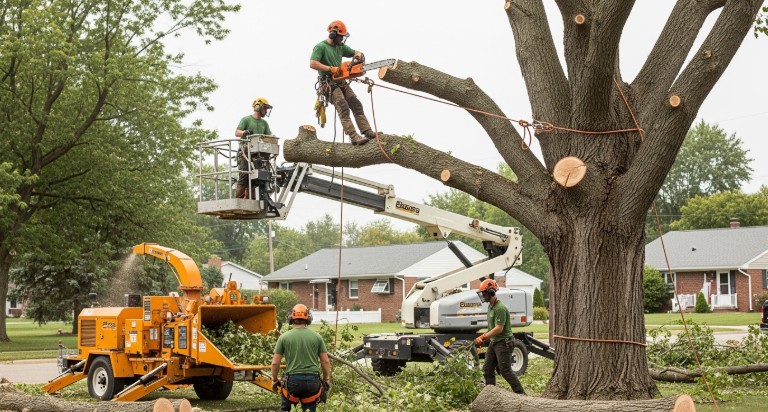
Instead of dropping the whole tree, arborists remove it piece by piece using ropes and rigging systems.
Debris cleanup and site restoration
Branches, logs, and wood chips are cleared, often processed through a wood chipper for disposal or reuse.
Final safety check after removal
The area is inspected to ensure no hazardous debris or unstable root structures remain.
how to find a good tree removal service? checklist before hiring
Before hiring, always verify:
- Licensing and insurance coverage (liability + worker safety)
- Experience with similar tree conditions
- Written estimates with full breakdowns
- Proper safety equipment and rigging systems
- Strong local reputation and reviews
- Availability for emergency tree service situations
Tools & Equipment Used by Professional Arborists
Chainsaws and cutting tools
Used for controlled trimming and sectional removal.
Rigging ropes and safety harnesses
Allow arborists to lower heavy limbs safely without damage.
Wood chippers and stump grinders
Convert debris into mulch and remove stumps completely.
Cranes and aerial lifts for tall trees
Used for extremely tall or unstable trees near structures or power lines.
Safety Considerations in Tree Removal
Electrical line hazards
One of the most dangerous scenarios involves trees near live wires, requiring extreme caution.
Unstable tree fall direction risks
Incorrect cutting angles can cause unpredictable collapse directions.
Personal protective equipment (PPE)
Professional arborists use helmets, eye protection, chainsaw-resistant clothing, and climbing gear.
Why DIY tree removal is dangerous
DIY removal often lacks proper rigging systems, increasing risks of injury, electrocution, or property damage.
Cost Factors of Tree Removal Services
Tree size and height impact
Larger trees require more labor, equipment, and time, increasing cost.
Tree condition and complexity
Rotten or storm-damaged trees require more controlled dismantling.
Location accessibility
Trees near homes, fences, or tight spaces are more expensive to remove safely.
Emergency vs scheduled removal
Emergency tree service after storms typically costs more due to urgency and risk.
Additional stump grinding costs
Stump grinding is often an optional add-on but recommended for full removal completion.
DIY vs Professional Tree Removal (Comparison Table)
| Factor | DIY Tree Removal | Professional Service (Spots Woods Tree Service) |
|---|---|---|
| Safety | High risk of injury | Fully safety-managed process |
| Equipment | Limited tools | Advanced arborist-grade equipment |
| Cost | Lower upfront cost | Transparent, full-service pricing |
| Efficiency | Slow and unpredictable | Fast and controlled execution |
| Property damage risk | High risk | Minimal risk due to planning |
| Expertise | None or basic | Certified arborists with field experience |
Maintenance & Prevention Tips
Regular tree health inspections
Annual inspections help identify early structural issues before they become dangerous.
Seasonal pruning practices
Proper trimming reduces weight stress and improves tree stability.
Soil and root care
Healthy soil conditions strengthen root systems and prevent premature decline.
Early disease detection
Fungal growth, leaf discoloration, and hollow branches should be addressed early.
When to Call a Professional Arborist
Signs of immediate danger (leaning, cracking)
Visible trunk cracks or sudden leaning indicate structural failure.
After storm damage
Windstorms can weaken internal fibers even if the tree appears stable externally.
Large or complex tree removal needs
Tall trees or those near structures require expert handling.
When DIY becomes unsafe
If you need ladders, chainsaws above shoulder height, or uncertain cutting angles, stop immediately.
At this stage, Spots Woods Tree Service should be contacted for a professional inspection and safe removal planning.
FAQs About Tree Removal Services
How do I know if a tree needs to be removed?
If it is dead, leaning, hollow, or damaging structures, removal is likely necessary.
How much does tree removal usually cost?
Costs vary based on size, location, and complexity, typically increasing for larger or hazardous trees.
Is tree removal covered by insurance?
It may be covered if the tree causes sudden damage due to storms or unforeseen events.
How long does tree removal take?
Most removals take a few hours, but complex jobs may take a full day or more.
Can I remove a tree myself legally?
In many areas, yes, but liability and safety risks make it strongly discouraged.
What happens to the wood after removal?
Wood is often chipped, recycled, or hauled away depending on service agreements.
Do I need a permit for tree removal?
Some municipalities require permits, especially for large or protected trees.
What is the safest season for tree removal?
Late fall and winter are often safest because trees are less active and visibility is better.
Conclusion
Understanding how to find a good tree removal service is ultimately about prioritizing safety, expertise, and transparency over price alone. Tree removal is not a simple landscaping task< it is a technical and high-risk operation that requires professional skill, proper equipment, and careful planning.
From storm-damaged trees to long-term structural risks, choosing the right arborist protects your property and ensures long-term safety. Spots Woods Tree Service represents the standard of professional, safety-focused tree care, offering reliable inspections, controlled removals, and expert guidance for every situation.
When in doubt, always choose experience over guesswork, because in tree work, one wrong cut can change everything.