Oaks are the backbone of the Eastern Shore tree canopy. Live oaks, water oaks, laurel oaks, and a few others fill yards from Daphne down through Fairhope and out past Point Clear. They are also the trees people call about most often when something starts to look wrong. Oak tree diseases on the Gulf Coast move differently from how they do up north, partly because of the warm, humid air and partly because the species mix here is its own thing.
This piece covers the issues most often seen on Baldwin County oaks, what they look like, and what they usually mean for the tree.
Why Gulf Coast oaks get sick
The conditions that make this part of Alabama good for oaks also make it good for the fungi and bacteria that go after them.
Warm winters
Without a hard freeze most years, pathogens that would die off in a colder climate stay active here. That gives them more time to spread and more rounds of infection per year.
High humidity
Fungal spores spread in moist air. The humidity that settles in over the bay from late spring through fall is a steady opening for foliar and bark issues.
Storm wounds
Hurricanes and thunderstorms break limbs, which leaves open wood that pathogens enter through. Oaks that came through a bad storm season are more likely to show disease the following year.
Stress
Drought, root damage from construction, and lawn equipment hits all weaken oaks. A weakened tree is the one that catches what a healthy tree shrugs off.
The main issues to know
A short list of what shows up most often on Eastern Shore oaks.
Oak wilt
Oak wilt is a fungal disease that moves through the water system of the tree. The leaves wilt from the edges inward, often turn brown while still partly green, and drop early. Red oaks and water oaks are more at risk than live oaks, though live oaks can get it too.
Once a tree has it, the timeline is short for red oaks, sometimes a single season. Live oaks can hang on longer but often decline in clusters because the fungus moves between connected root systems.
Hypoxylon canker
This one shows up on stressed oaks, often after drought or root damage. The bark sloughs off in patches, and a silvery or tan layer of fungal material is visible underneath. Sometimes it looks like the trunk has been scrubbed with sandpaper.
By the time hypoxylon shows on the outside, the tree is usually past saving. It is a sign of advanced decline, not an early warning.
Armillaria root rot
A fungal disease that attacks the roots and lower trunk. The first signs are usually thinning in the canopy and branches that fail to leaf out in spring. Mushrooms at the base of the tree, especially in clusters after rain, are a giveaway. Cutting into the lower trunk shows white, sheet-like fungal growth under the bark.
Armillaria is slow but steady. Trees can live with it for years before they fail.
Anthracnose
A foliar disease that hits oaks in wet springs. Leaves develop brown patches along the veins, sometimes curl, and drop early. It looks alarming, but anthracnose rarely kills an oak on its own. The tree puts out a second flush of leaves and moves on.
It is more of a problem on a tree that already has other issues going on.
Bacterial leaf scorch
A bacterial disease spread by leafhoppers. Leaves brown at the edges with a yellow halo between the brown and the green, the symptoms repeat year after year, and the tree slowly declines over five to ten years. Often confused with drought stress at first.
There is no cure, only management to slow the decline.
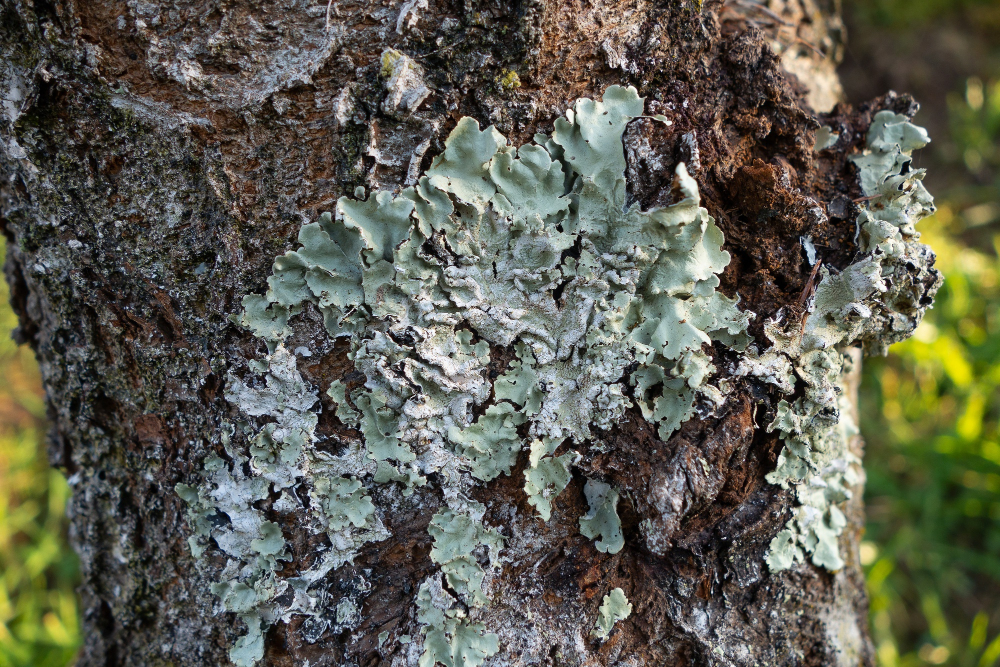
Lichen & Spanish moss
Worth a note because these get blamed for problems they are not causing. Lichen on bark and Spanish moss in the canopy are not diseases and are not harming the tree. They show up more on trees with thinning canopies, which is why people associate them with declining oaks, but they are a result of the decline, not the cause.
What to watch for in your yard
A few things that suggest it is time for a closer look.
Leaves browning out of season
Leaves dropping in midsummer, browning from the edges, or wilting on otherwise undamaged branches are usually the first sign something is wrong below the surface.
Mushrooms at the base
Fungal fruiting bodies on the trunk or roots are almost never a good sign on a live tree. They mean active decay somewhere inside.
Bark slipping or sloughing
Patches of bark coming off, especially with discolored wood underneath, point to advanced internal issues.
Canopy thinning year over year
A canopy that gets thinner each spring is one of the clearest signs of long-term decline.
Suckers at the base
A flush of small shoots at the base of an oak often means the tree is under stress and trying to regenerate from the roots.
When to call an arborist
A trained eye can usually tell from a walk-around what is going on. Some issues are treatable. Some are not. The earlier the visit, the more options there are. A yard oak that has lived through fifty hurricane seasons is worth the cost of a proper look.
Healthy Gulf Coast oaks are the trees that get checked before they start to fail, not after.