
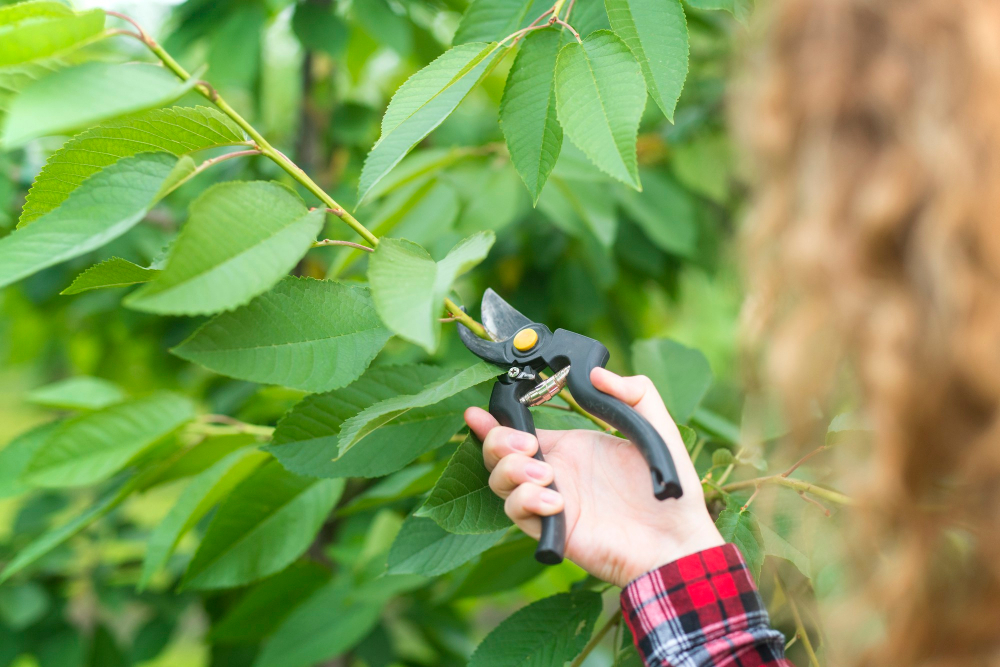
Tree trimming pricing on the Eastern Shore is one of those things that looks simple on a Google search and then turns into a wide range once you start getting quotes. National cost guides will tell you a number between $200 and $800 per tree. That is not wrong, but it leaves out almost everything that actually moves the price on a real Baldwin County property.
This walkthrough lays out what trimming costs locally, what changes the number, and what to watch for in a quote.
The general range around Daphne & Fairhope
Most residential tree trimming jobs on this side of the bay fall somewhere between $250 and $1,500 per tree. A few small ornamentals in a front yard might come in under that. A mature live oak overhanging a roofline can land well above it.
When a crew gives you a single number for the whole property, they are usually averaging across the trees on the lot. A six-tree job at $1,800 might break down as $200 for two small crape myrtles, $400 for a medium pine, and $1,000 for one large oak. The total looks reasonable. The split matters when you want to know what each tree actually needs.
What drives the tree trimming cost up or down
The price tag on tree trimming is not just about the tree. It is about the tree, where it sits, what is around it, and how much work the crew has to do to get the job done safely.
Tree size
Height and canopy spread matter more than anything else. A 20-foot ornamental can be trimmed from a ladder with hand tools. A 60-foot live oak needs a climber, ropes, and sometimes a bucket truck or crane. The labor hours scale up fast as the tree gets bigger.
Tree species
Live oaks, water oaks, and large pines dominate this area, and each one trims differently. Live oaks carry heavy lateral limbs that need careful weight reduction. Water oaks tend to have deadwood that needs to come out. Pines are mostly about height and reach. The species sets the approach, and the approach sets the time.
What the tree is over
A tree growing in the middle of an open yard is the lowest cost case. A tree leaning over a roof, a pool, a fence, or a driveway costs more because the crew has to rig limbs down piece by piece instead of letting them fall. Anything near power lines pushes the price further and may require the utility company to drop the line.
Access for equipment
Crews price the time it takes to get gear in and out. A tree at the end of a long, narrow driveway with a soft yard takes longer to set up on than a tree next to a paved street. Older Fairhope lots, waterfront properties, and homes with tight side yards often add time to the clock.
Cleanup
Most quotes include hauling brush off-site. A few do not. Read the scope so you know if a debris pile gets left for you.
Typical job sizes in this area
It helps to picture what different price points actually buy on the Eastern Shore.
Small jobs
A $250 to $500 trim usually covers one or two smaller trees, light deadwood removal, or shaping work on ornamentals. This is the kind of job that takes a two-person crew a couple of hours.
Mid-sized jobs
A $500 to $1,500 trim is the range for one larger tree or a few medium ones. Most pruning work on healthy oaks and pines in a yard falls here. A crew might be on-site half a day.
Larger jobs
A $1,500 to $4,000 trim involves multiple large trees, structural pruning on a mature oak, or work that needs a bucket truck. These are full-day jobs for a crew of three or more.
Specialty work
Crane-assisted trimming on a giant live oak over a house can run from $3,000 to $8,000 or more. The crane itself is a heavy cost line, and the rigging takes time on top of that.
Why the lowest quote is often the wrong one
Tree trimming has real risk attached to it. A limb dropped on a roof or a worker hurt on your property can turn a $500 job into a much bigger problem. The lowest quote in your inbox is sometimes from a crew that is not fully insured, does not carry workers comp, or plans to make up the price gap by cutting corners on cleanup or safety.
A good rule of thumb on the Eastern Shore is to throw out the highest and the lowest quote, then look at the middle two or three. Ask each crew about insurance, certifications, and how they handle limbs over structures. Get the scope in writing.
When trimming pays off
Trimming a tree at the right time, with the right cuts, helps it last longer and stay safer. Putting it off until storm season has already started, or until limbs are dropping on the lawn, usually ends up costing more in the long run. Work done on a sound tree in the spring or fall is cheaper and easier than the work done on a damaged one after a hurricane.
Pricing varies on the Eastern Shore. The crews that quote a number, explain the why behind it, and put it in writing are usually the ones worth keeping in your contacts list.