Some trees look fine from the kitchen window and are actually a serious problem. Others look terrifying and are structurally solid. Figuring out which is which takes more than a quick glance from the yard, and for Daphne homeowners with mature pines, water oaks, or live oaks growing near the house, getting that judgment wrong can cost a lot of money.
A hazardous tree is one that has a reasonable chance of failing and hitting something that matters. A house, a vehicle, a fence, a power line. The job of a trained crew is to spot those trees before they come down on their own, and then get them out of the yard without breaking anything in the process.
How Pros Actually Identify a Hazardous Tree
Tree assessment is not guesswork. There is a real process, and it looks at the tree from the ground up.
Starting With the Root Zone
The first thing a trained eye checks is the base of the tree. Mushrooms or conks growing at the root flare are a red flag. They usually mean there is internal decay in the roots or lower trunk, which is the part of the tree holding everything else up.
Exposed roots that look dried out, cracked, or lifted on one side of the tree point to root damage or soil movement. A tree that has started to tilt, even slightly, often shows a soil mound on the opposite side of the lean where roots are pulling up out of the ground.
Checking the Trunk
From there, the assessment moves up the trunk. Cavities, vertical cracks, bulges that look out of place, and areas where the bark is loose or falling off are all worth a closer look. A cavity on its own is not always a reason for removal. A cavity combined with decay and a lean toward a house usually is.
Sounding the trunk with a mallet can also tell an experienced ear a lot. Solid wood has one sound. Hollow or decayed wood has another. For trees that warrant deeper inspection, resistograph testing measures internal density and confirms how much sound wood is actually left.
Looking at the Canopy
The upper part of the tree matters too. Dead branches in the canopy, called deadwood, are a falling hazard by themselves and often signal broader decline. Areas of the crown that are thinner than the rest, discolored leaves, or premature leaf drop are all signs something is off internally.
Codominant stems with included bark, which shows up as a V-shaped split where two trunks come together, are one of the more common failure points in water oaks and slash pines around Daphne. They split in storms, usually taking half the tree down with them.
Why Removal Near Structures Is Different
Once a tree has been identified as hazardous, the next problem is getting it out of the yard without causing the damage it was about to cause on its own. This is where a lot of homeowners get in trouble hiring the wrong crew.
The Wrong Way to Do It
A bad removal looks like this. A guy with a chainsaw climbs the tree, or worse, starts cutting from the ground. Limbs are dropped without rigging. The trunk is felled in one piece with no control over where it lands. Something expensive gets broken, and because the crew is uninsured, the homeowner ends up paying for it.
This happens more often than it should. The cost of a cheap tree job is almost always higher than the cost of a professional one, once you factor in the roof repair.
The Right Way to Do It
A professional removal near structures starts with a plan. The crew looks at the tree, the surrounding obstacles, the access points for equipment, and figures out how to take it apart in a way that controls where every piece goes.
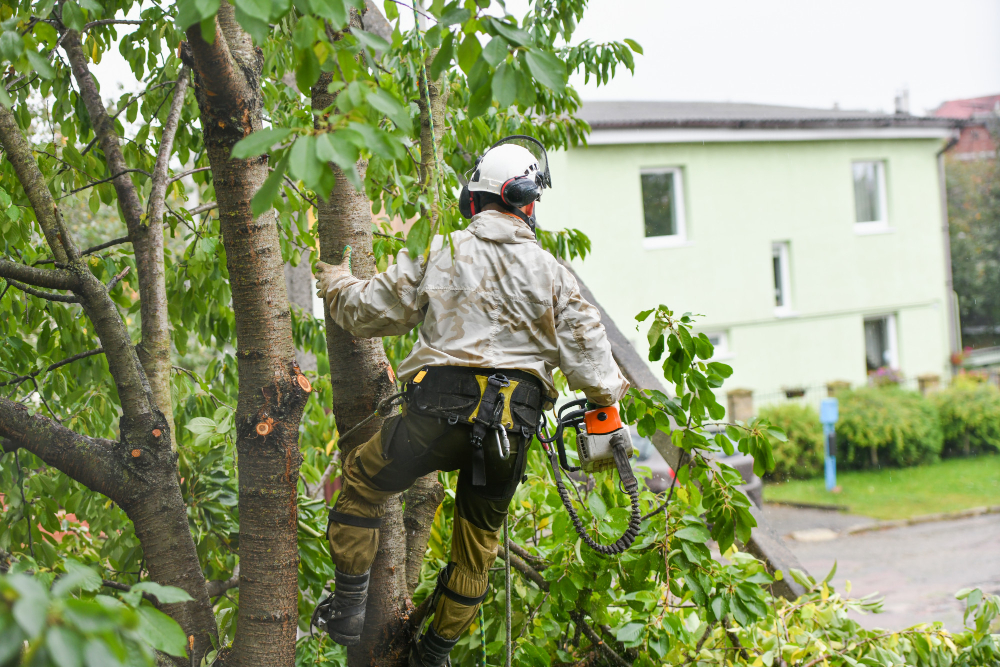
For most hazardous trees near houses in Daphne, this means dismantling the tree in sections from the top down. A climber goes up with ropes and rigging gear. Branches get tied off before they are cut, then lowered to the ground in a controlled descent. The trunk comes down in manageable pieces, each one rigged so it cannot swing into anything on the way down.
When a Crane Is the Right Tool
Some trees are too close to structures, too large, or too unstable for a rope-and-rigging approach. For those, a crane is the correct tool. The crane picks up each section as it is cut, holds the weight so the cut can be made cleanly, and swings the piece to a safe drop zone in the yard or street.
Crane removals look expensive up front, but for the right tree they are actually cheaper than the alternative, because the job goes faster, involves fewer people, and has almost no risk of damaging the structure below.
What Homeowners Should Look For
If you have a tree that you suspect is hazardous, the first step is getting it evaluated by someone qualified. The second step is making sure whoever does the removal is set up to do it without causing more damage than the tree would have caused on its own.
Confirm the crew is fully insured. Ask to see proof of general liability and worker’s compensation. Any legitimate operation provides this without hesitation.
Ask about the removal plan. A crew that cannot tell you how they are going to take the tree down is not ready to take the tree down. The plan should cover access, rigging, crane use if needed, traffic control if the tree affects the road, and cleanup.
Hazardous trees do not get safer while you wait. Getting them identified early, evaluated properly, and removed by the right crew is how Daphne homeowners keep a bad tree from turning into a worse problem.