
Short Answer: Can tree sap heal wounds?
Tree sap cannot “heal” wounds in the same way medicine does, but certain types of sap especially resins have strong natural antimicrobial and sealing properties. In trees, sap acts as a protective biological barrier that helps prevent infection, block moisture loss, and defend against pests after injury.
While it is not a direct medical treatment for humans, tree sap has historically been used in traditional medicine for its antiseptic-like qualities. Modern science supports that some plant resins contain compounds that inhibit bacteria and fungi, which is why they were often used in balms and natural remedies. In practical arboriculture, these biological responses are also closely considered during pruning, maintenance, and compliance with Tree Removal Regulations, since improper cutting or removal can increase infection risk, disrupt natural healing (compartmentalization), and impact overall tree health and ecosystem stability.
In short: tree sap helps protect and seal, rather than actively “heal” in a clinical sense.
Can tree sap heal wounds? (Core Scientific Explanation)
To understand whether can tree sap heal wounds, it’s important to first understand what tree sap actually is. Tree sap is a broad term that includes different internal fluids such as xylem sap, phloem sap, resin, and latex. Each serves a different biological function.
- Xylem sap carries water and minerals upward from roots
- Phloem sap distributes sugars and nutrients throughout the tree
- Resin acts as a defensive sealing agent
- Latex serves as a protective chemical defense in some species
Unlike animals, trees do not “heal” through cell regeneration in the same way. Instead, they compartmentalize damage and seal wounds using sap and chemical compounds. This prevents infection and stabilizes damaged areas.
Natural compounds like terpenes, phenols, and resins give sap antimicrobial properties, which is why it is often associated with healing effects.
Can tree sap heal wounds? What science says about sap’s healing properties
Scientific studies show that many tree saps, especially resins, contain biologically active compounds with antimicrobial and antifungal properties.
Key findings include:
- Resin can inhibit bacterial growth on exposed plant tissue
- Terpenes in pine and conifer resins act as natural antiseptics
- Some tree saps reduce fungal colonization in damaged bark
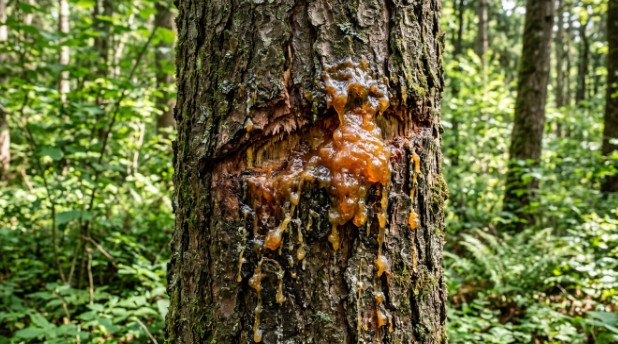
For example, pine trees release sticky resin when bark is damaged. This resin quickly hardens, sealing the wound and preventing microbes from entering. This is not healing in a regenerative sense but a protective defense mechanism.
Common trees with medicinally studied sap or resin include:
- Pine trees
- Birch trees
- Spruce and fir species
- Acacia and gum-producing trees
These natural compounds have inspired many traditional remedies and modern antiseptic research.
Traditional and modern uses of tree sap in natural medicine
Across cultures, tree sap has long been used as a natural healing material. Indigenous communities and traditional herbal systems often applied tree resins to cuts, burns, and infections due to their protective qualities.
Historically:
- Pine resin was used as a wound dressing
- Birch sap was consumed for detox and vitality
- Tree gums were applied as soothing balms
In modern contexts:
- Resin is used in natural antiseptic creams
- Plant extracts are studied for antibacterial drug development
- Some resins are used in dental and surgical materials
Although promising, modern medicine still relies on controlled pharmaceuticals for wound treatment, not raw sap.
How Tree Sap Works in Nature (Self-Healing Mechanism)
When a tree is injured, it activates a biological defense system rather than “healing” in the human sense. Sap production increases at the injury site, and chemical compounds rapidly form a protective barrier.
This process:
- Blocks microbial entry
- Prevents water loss
- Limits insect invasion
- Stabilizes structural damage
Essentially, sap acts like a natural biological “sealant” that protects the tree while internal tissues slowly compartmentalize the damage.
How Tree Sap Interacts With Wounds: Step-by-Step Guide
Step 1: Tree injury occurs
Damage can result from:
- Insect attacks
- Storms or wind breakage
- Human pruning or logging
Step 2: Sap is activated and flows to the wound site
The tree increases resin or sap production near the injury to initiate defense.
Step 3: Sap hardens or thickens
Resin or gum begins to solidify, forming a protective coating over exposed tissue.
Step 4: Protection from pathogens
Antimicrobial compounds in the sap inhibit bacteria, fungi, and insect larvae.
Step 5: Long-term structural healing
Over time, the tree isolates damaged tissue and grows new bark layers around the wound.
Types of Tree Sap and Their Healing Properties
Tree Sap Types vs Healing Functions
| Type of Sap | Source Trees | Key Components | Function in Wound Protection | Human Use |
|---|---|---|---|---|
| Resin | Pine, fir, spruce | Terpenes, organic acids | Seals wounds, prevents infection | Salves, antiseptics |
| Latex | Rubber tree, fig | Alkaloids, proteins | Defensive barrier against insects | Industrial rubber, medical products |
| Xylem sap | Most trees | Water, minerals | Nutrient transport, limited healing role | Minimal direct use |
| Gum exudate | Acacia, cherry | Polysaccharides | Moisture retention, protective coating | Food additives, herbal remedies |
Sub-questions people also ask about tree sap healing
Can tree sap heal wounds on humans?
Not directly. It may have antimicrobial properties, but it is not a medical treatment.
Is tree sap antibacterial or antiseptic?
Some resins are naturally antibacterial and antifungal.
Which tree sap is used for medicinal purposes?
Pine resin, birch sap, and acacia gum are commonly studied and used.
Is pine resin safe for skin wounds?
It may have benefits but can also irritate skin; medical use requires caution.
How do trees heal their own wounds using sap?
They seal wounds with resin and isolate damaged tissue to prevent infection.
Can tree sap stop bleeding or infection?
It can help form a protective barrier but does not replace medical treatment.
Are there risks of using tree sap on human skin?
Yes, possible allergic reactions, contamination, or toxicity depending on species.
What is the difference between sap and resin in healing?
Sap is general fluid transport; resin is a specialized defensive healing-like substance.
Safety Considerations When Using Tree Sap
While tree sap has interesting natural properties, using it on human wounds requires caution:
- Some individuals may experience allergic reactions
- Certain tree species produce toxic compounds
- Raw sap may contain bacteria or environmental contaminants
- It is not a substitute for antiseptic or medical-grade treatment
For serious injuries, professional medical care is always safer and more effective.
Benefits and Limitations of Tree Sap for Wound Healing
Natural benefits of tree sap
- Contains antimicrobial compounds
- Forms protective sealing layers
- Historically used in traditional medicine
Limitations of tree sap
- Not clinically proven as a wound treatment
- Effectiveness varies by species
- Some types can be irritating or toxic
- Cannot replace modern medical care
Environmental Role of Tree Sap in Tree Survival
Tree sap plays a crucial ecological role beyond human interest. It helps trees:
- Defend against insects and pathogens
- Seal physical damage to bark
- Maintain internal water balance
- Strengthen forest resilience after environmental stress
In many ecosystems, sap production is essential for forest survival and regeneration.
Misconceptions About Can Tree Sap Heal Wounds?
A common myth is that all tree sap is naturally medicinal. In reality:
- Not all sap has healing properties
- Sap is not universally safe for humans
- Resin is often mistaken for general sap
- Tree defense mechanisms are biological, not intentional healing
Understanding these distinctions is important for both safety and scientific accuracy.
FAQs About Can tree sap heal wounds?
Can tree sap heal wounds naturally without human help?
Trees use sap to protect and isolate wounds, not to regenerate like animals.
What happens when a tree gets injured?
It produces sap and resin to seal and protect the damaged area.
Is tree sap the same as resin?
No. Resin is a specialized protective substance; sap includes multiple fluids.
Can tree sap be used as a natural antiseptic?
Some types show antimicrobial properties, but it is not a medical antiseptic.
Which trees produce the most medicinal sap?
Pine, birch, and acacia trees are commonly studied for beneficial compounds.
Is it safe to apply tree sap directly on cuts?
Not always, risks include irritation, infection, or allergic reaction.
How long does tree sap take to seal a wound?
It can seal within hours to days depending on species and injury severity.
Does tree sap have antibacterial properties?
Yes, especially resin-rich saps from conifer trees.
Conclusion
Tree sap plays a vital protective role in the survival of trees by sealing wounds, preventing infection, and defending against environmental threats. While it contains natural antimicrobial compounds that inspired traditional medicine, it does not function as a direct healing agent in the way human medical treatments do. Professionals in arboriculture, such as Spots Woods Tree Service, often emphasize proper pruning and tree care practices to support these natural defense mechanisms and reduce the risk of long-term damage or disease.
So, when answering can tree sap heal wounds, the most accurate conclusion is: it protects and seals rather than truly heals.
Understanding this distinction highlights the sophistication of plant defense systems and reminds us how deeply interconnected natural biology truly is.