
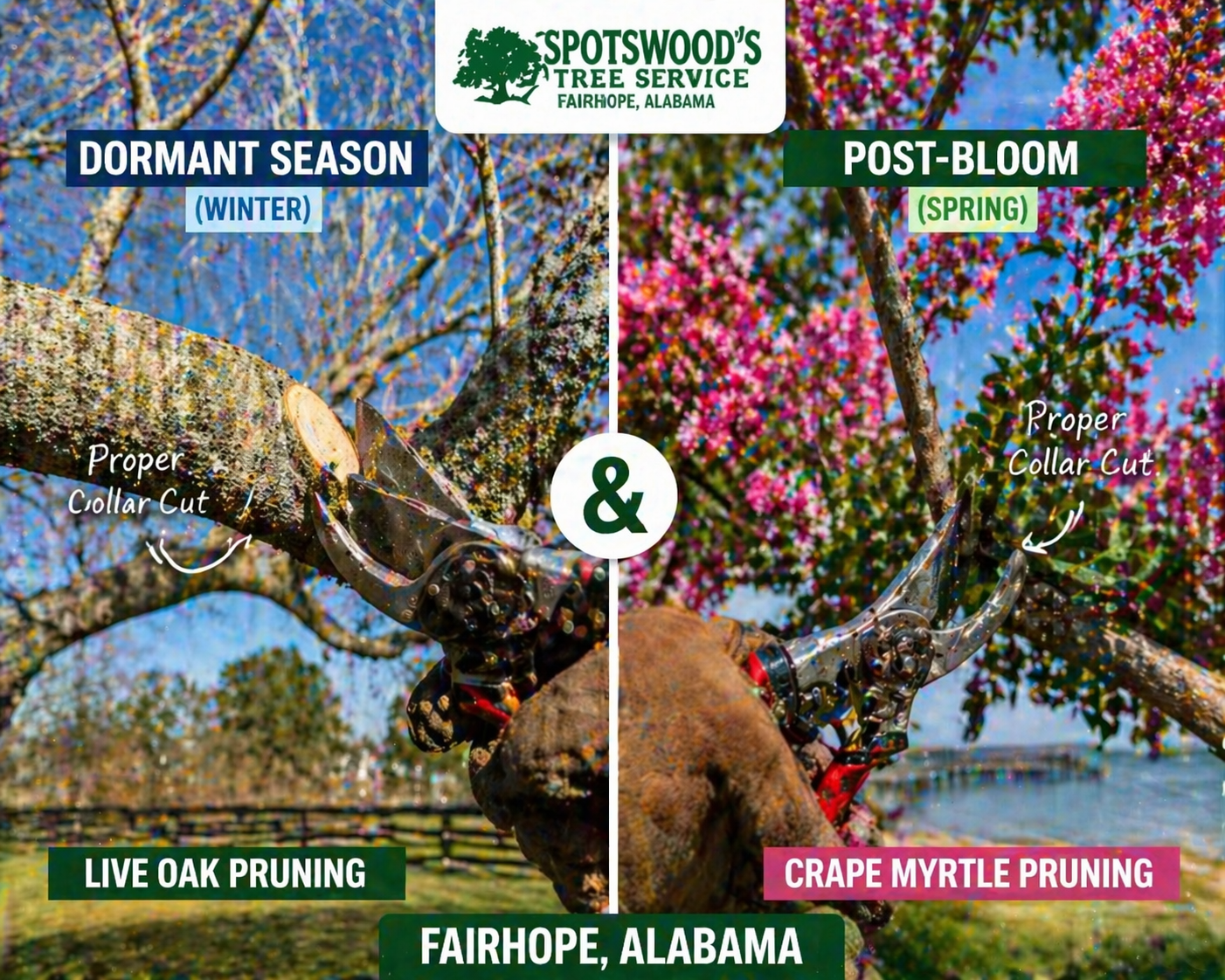
Timing is the difference between a pruning job that helps a tree and one that hurts it. In Fairhope, where live oaks shade half the town and crape myrtles line nearly every driveway, the Gulf Coast climate changes the standard pruning calendar that works in cooler parts of the country. Mild winters, long humid summers, hurricane season, and species that flower and leaf out at different times all factor into when each tree on your property should actually be pruned.
This guide breaks down the right seasonal windows for the trees Fairhope homeowners most commonly have, so you know what to prune when and why.
Why the Gulf Coast Calendar Is Different
Most tree pruning advice is written for climates with harder winters and a clear dormant season. Fairhope does not work that way. Trees here break dormancy earlier, stay active longer, and face different pressures than trees in Tennessee or North Carolina. Three factors change the timing:
- Mild winters mean the dormant window is shorter, usually December through early February
- High humidity and rainfall encourage fungal disease when pruning wounds are exposed in the wrong season
- Hurricane season from June through November makes pre-storm structural pruning a priority in its own time window
That combination means the ideal pruning schedule for Fairhope is species-specific and calendar-aware, not a single rule applied to every tree in the yard.
Live Oaks: The Fairhope Calendar Rule
Live oaks are the signature tree of Fairhope. They are also one of the most timing-sensitive species when it comes to pruning, and getting the window wrong carries real risk.
Safe Window: November Through January
The only truly safe window to prune live oaks in Fairhope is late fall through mid-winter, when oak wilt risk is at its lowest. During this period, the beetles that spread the oak wilt fungus are dormant, and fresh pruning wounds are much less likely to attract them. Late November through the end of January is the sweet spot.
Danger Window: February Through July
Pruning a live oak during the active growing and beetle-flight season is one of the fastest ways to introduce oak wilt to a tree that was otherwise healthy. The fungal spores are spread by sap-feeding beetles that are attracted to fresh wounds, and once the fungus enters the vascular system, it can kill a live oak within months.
If an oak absolutely must be pruned during this window because of storm damage or an emergency hazard, the wound should be painted immediately with pruning sealer to deter beetles. This is one of the few cases where sealing a cut is recommended rather than leaving it to heal naturally.
What This Means for Fairhope Homeowners
If you have live oaks on your property, plan your pruning for winter. Not spring, not summer, not early fall. The window is narrow by Fairhope standards, and missing it means waiting until the next year.
Southern Magnolias: After the Bloom
Southern magnolias are among the most common landscape trees in Fairhope and throughout the Eastern Shore. They flower from late spring through early summer, and pruning timing should work around that cycle.
Best Window: Late Spring to Early Summer, Right After Flowering
Pruning a magnolia immediately after the spring flowering cycle ends gives the tree time to push new growth for the next year without sacrificing blooms. Shaping, crown cleaning, and structural cuts can be done in this window without reducing next season’s flowering.
What to Avoid
Do not prune magnolias in late summer or fall. Pruning at that time cuts off the buds that will become next year’s flowers, and the tree’s recovery response in the warm, humid months can introduce fungal problems.
Pines: Flexible Year-Round With One Exception
Loblolly, slash, and longleaf pines are common throughout Fairhope and Baldwin County. Pines tolerate pruning across most of the year, but there are still rules worth following.
Best Window: Winter Through Early Spring
Pruning pines during the dormant or near-dormant season minimizes sap flow, reduces stress, and gives the tree time to compartmentalize wounds before the heat and humidity of summer set in.
The Exception: Active Southern Pine Beetle Season
Pruning pines during active southern pine beetle flight periods, typically late spring through summer, can attract the beetles to fresh cuts and put the tree at risk. In Alabama, where beetle populations have been elevated in recent years, this is worth taking seriously. If you do not need to prune in that window, wait.
Hurricane Prep Exception
Pine removal of dead limbs, hangers, and storm-damaged wood before June is the exception to every other rule. A pine dropping a 40-foot branch on a Fairhope rooftop during a tropical system is a worse problem than the timing risk of a late spring pruning cut. Safety wins here.
Crape Myrtles: February Dormancy and the Topping Warning
Crape myrtles are everywhere in Fairhope, from single specimen trees along Section Street to multi-stemmed groupings in front yards across the Eastern Shore. They are also the tree most frequently pruned incorrectly.
Best Window: Mid to Late February
Late winter, when the tree is dormant but close to breaking into spring growth, is the optimal pruning window for crape myrtles in Fairhope. Remove suckers, crossing branches, and deadwood. Lightly shape the canopy. Do not make major cuts on mature wood unless there is a structural reason.
Do Not Commit Crape Murder
Topping crape myrtles, cutting them back to knuckled stubs every year, is so common it has a name: crape murder. It produces weak, whippy regrowth that cannot support the blooms, creates disease entry points at every cut, and destroys the natural sculptural form that makes crape myrtles attractive in the first place. Properly pruned crape myrtles need very little removal each year, and Fairhope’s mild climate means they rarely need aggressive shaping.
Pecans: Late Winter Before Bud Break
Pecan trees are common on larger Fairhope properties and throughout rural Baldwin County. They have a specific pruning window that differs from shade trees.
Best Window: Late January Through Mid-February
Prune pecans during late dormancy, before buds swell but after the worst cold weather has passed. This timing reduces disease pressure and lets the tree focus spring energy on new growth and nut production rather than wound recovery.
What to Avoid
Summer pruning on mature pecans increases the risk of pecan scab and other fungal issues that thrive in Gulf Coast humidity. Also avoid heavy structural cuts on older trees, which rarely recover well from aggressive pruning.
Hurricane-Prep Pruning: The One Rule That Overrides Everything
Regardless of species, structural pruning to prepare trees for hurricane season should be done before June 1. That means the ideal window for most Fairhope properties is February through May, when you can address:
- Deadwood and hanging branches that will fail first in high wind
- Overextended horizontal limbs over roofs, driveways, or pool areas
- Crossing or rubbing branches that create weak points
- Broken tips and storm-damaged wood left from the previous season
For live oaks specifically, this rule conflicts with the oak wilt timing. Complete structural pruning on oaks in late winter (January) to stay within the safe oak wilt window while still finishing before hurricane season begins. Other species have more flexibility in that spring window.
When to Call a Professional vs. Handle It Yourself
Light pruning of small branches within reach from the ground is reasonable for homeowners to handle. Everything else is professional work. That includes:
- Anything requiring a ladder or climbing equipment
- Branches over three or four inches in diameter
- Work on trees near power lines, structures, or public areas
- Live oaks of any size, given the timing and technique requirements
- Large crape myrtles that have been topped in previous years and need rehabilitation
Proper pruning is not about cutting branches. It is about knowing which cuts to make, where to make them, and when. A tree pruning service in Fairhope that understands Gulf Coast species and local conditions produces results that show up years later in stronger structure, better bloom production, and fewer storm failures.
Planning Your Pruning Calendar
A simple rhythm for most Fairhope properties looks like this: oaks and pecans in January, crape myrtles in February, structural hurricane prep on other species through May, magnolias right after bloom in late spring, and only emergency work during summer and early fall. Fall cleanup and light shaping can happen in November before the oak window opens.
Working with the Gulf Coast calendar instead of against it is the difference between trees that thrive here and trees that struggle. Fairhope’s tree canopy is one of the things that makes this town what it is. Keeping it that way is seasonal work done right.