
If you’re searching for a how to prune an apple tree diagram, the goal is to understand the tree’s ideal structure: a strong central leader, evenly spaced scaffold branches, and an open canopy that allows sunlight and airflow to reach every part of the tree.
A proper diagram is not just a visual aid, it is a structural blueprint that guides every cut. When followed correctly, it improves fruit production, reduces disease risk, and prevents storm-related branch failure. Professional arborists like Spots Woods Tree Service rely on these structured pruning models, especially for mature or neglected apple trees where incorrect cuts can permanently reduce yield and weaken stability.
What is Apple Tree Pruning and Why Diagrams Matter
What a how to prune an apple tree diagram represents
A pruning diagram visually represents how an apple tree should be shaped for long-term health and productivity. It shows:
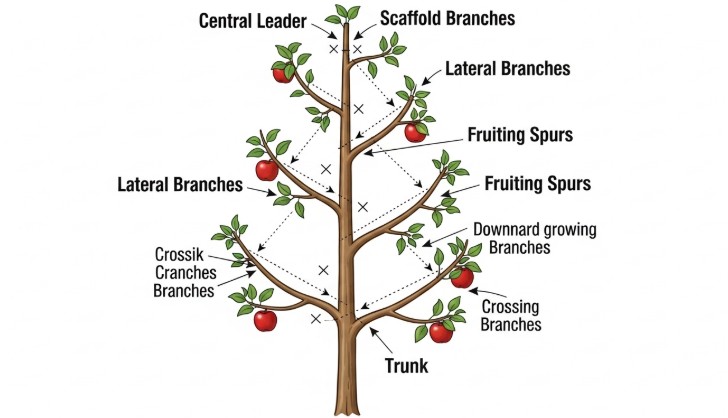
- Central trunk (leader)
- Primary scaffold branches
- Secondary growth zones
- Areas to remove for airflow
This structure ensures balanced growth and reduces stress points.
Why visual pruning structure improves results
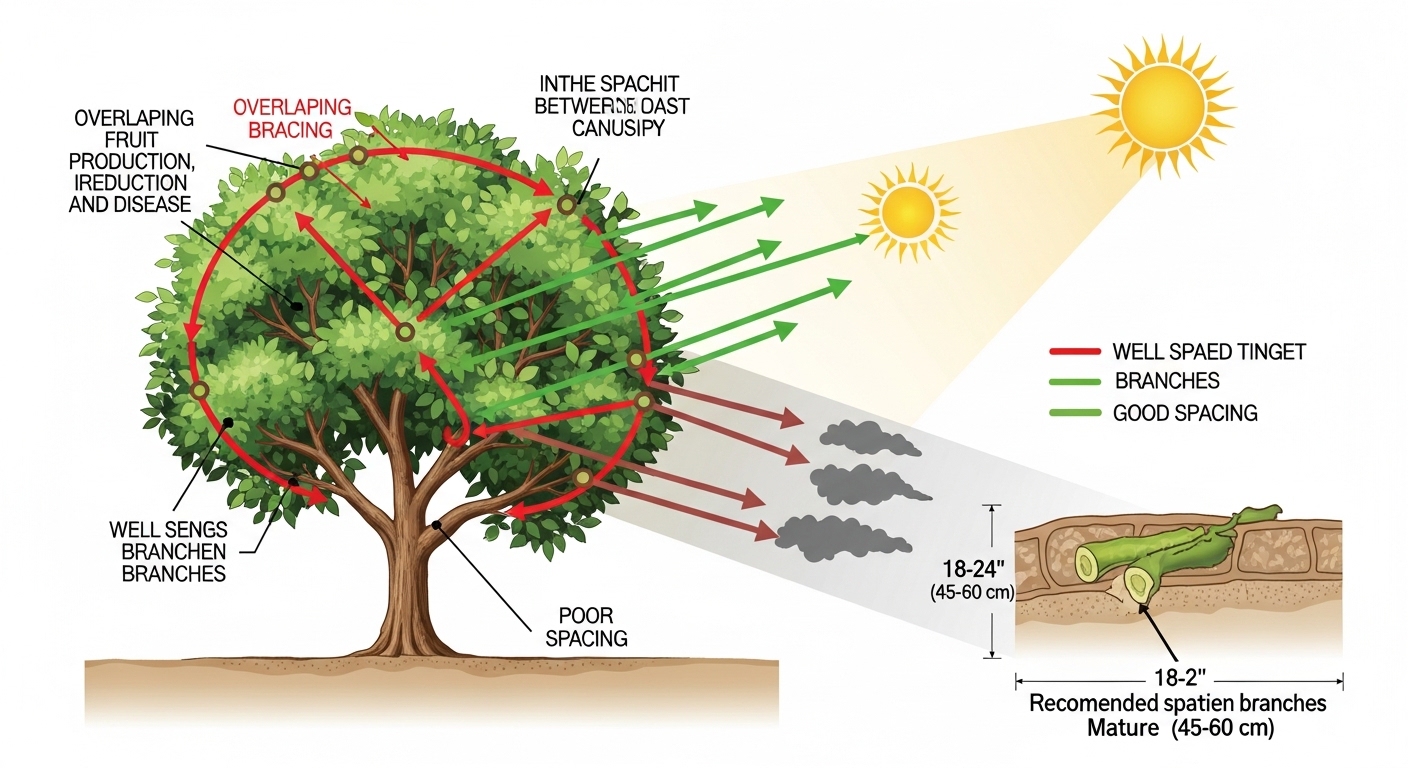
Diagrams help prevent common homeowner mistakes such as over-cutting or random branch removal. With a structured approach, the tree develops:
- Better sunlight penetration
- Stronger branch distribution
- Higher fruit yield
- Reduced disease risk
From an arborist perspective, visual structure is the difference between “guesswork pruning” and professional-grade tree shaping.
Central leader vs open center system
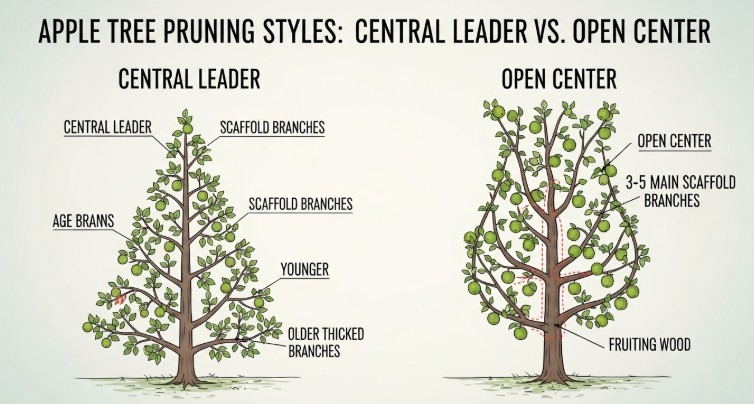
There are two main pruning systems:
- Central Leader System: One dominant vertical trunk (preferred for apple trees)
- Open Center System: Vase-like shape with multiple main branches
Most apple trees benefit from the central leader system because it provides stronger structural integrity during storms and heavy fruit loads.
Common Apple Tree Problems That Require Proper Pruning
Overcrowded canopy blocking sunlight
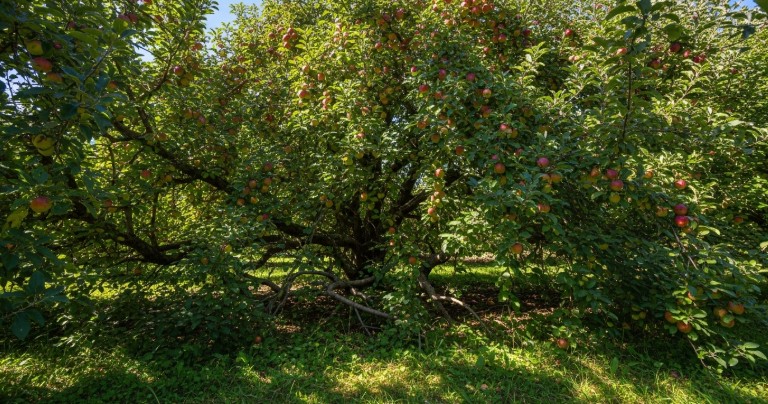
Dense foliage reduces photosynthesis, leading to weak fruit and poor air circulation.
Dead or diseased branches spreading infection
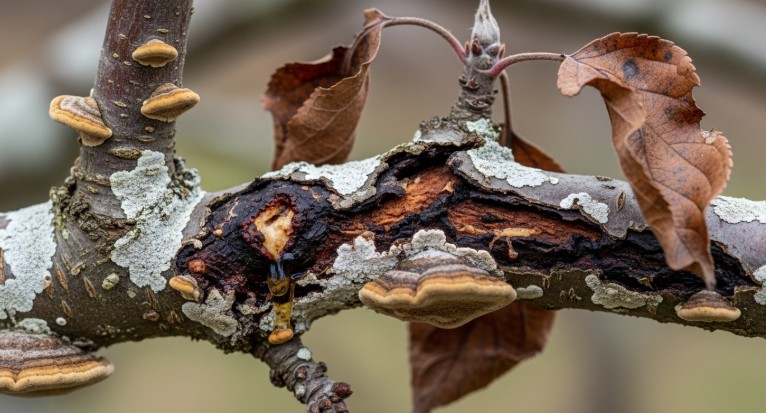
Dead wood attracts pests and spreads decay quickly if not removed.
Weak branch angles causing splitting
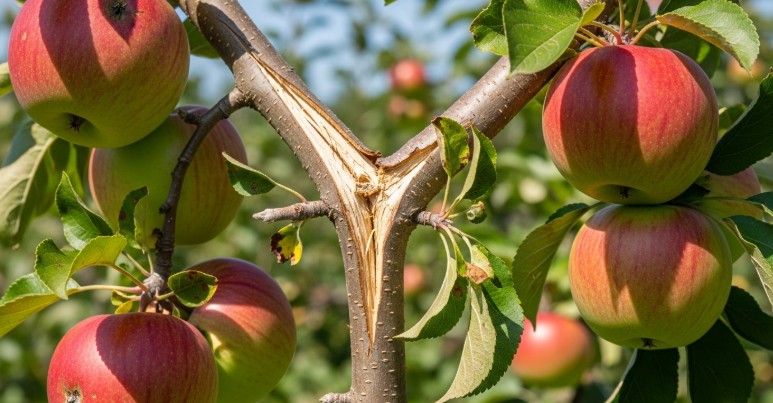
Branches with narrow angles often fail under wind or fruit weight.
Storm damage and broken limbs
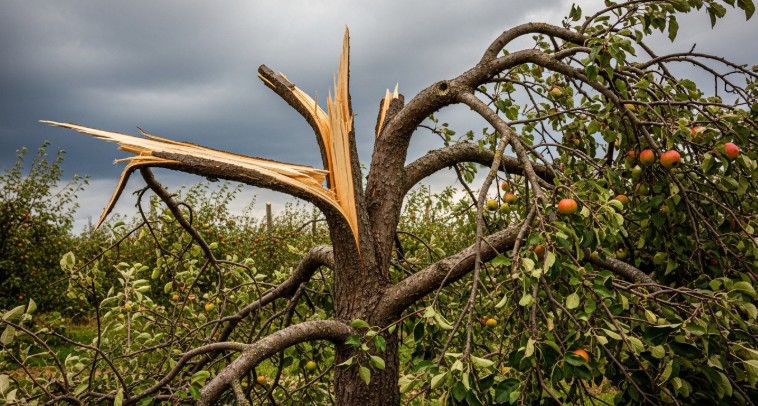
Storms frequently cause hidden internal cracks, increasing long-term risk of collapse if not properly pruned.
Step-by-Step Guide: how to prune an apple tree diagram method
Step 1 – Study the pruning diagram structure
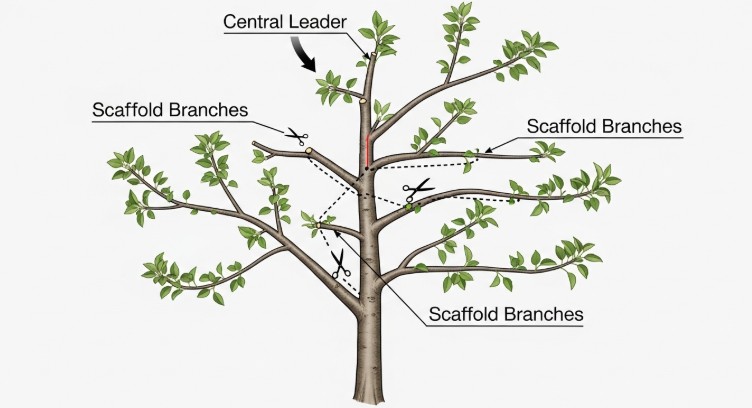
Before cutting, identify:
- Central leader
- Main scaffold branches
- Crossing or inward growth
Step 2 – Remove dead and damaged wood
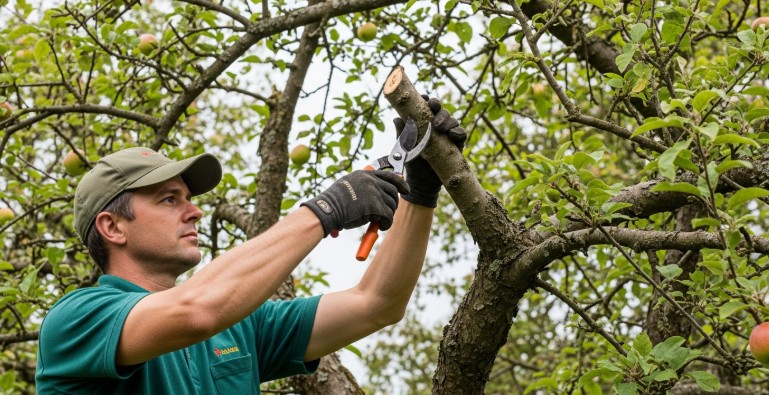
Cut back to healthy tissue to stop disease spread and improve tree recovery.
Step 3 – Thin crowded branches for airflow
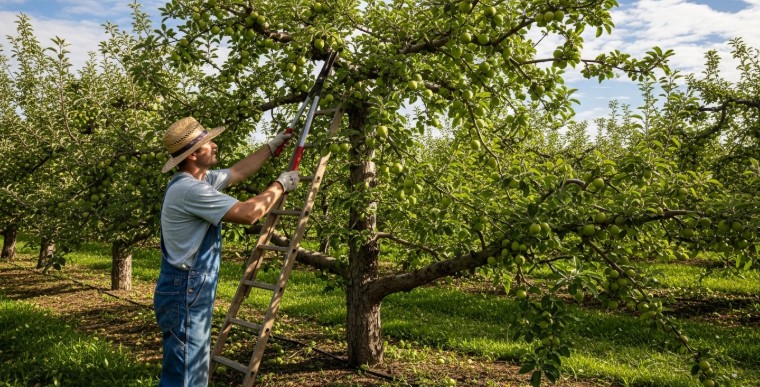
Proper spacing prevents fungal infections and improves fruit size.
Step 4 – Maintain central leader structure
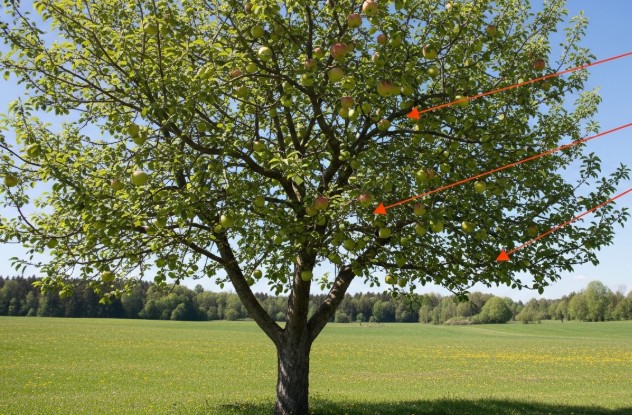
This ensures vertical strength and balanced canopy development.
Step 5 – Shape scaffold branches evenly
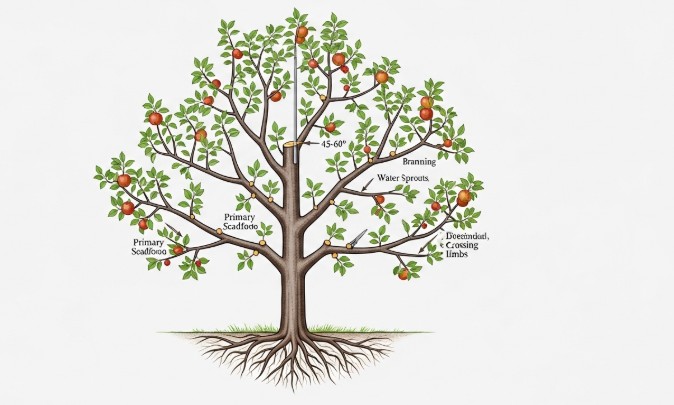
Scaffold branches should be evenly spaced to distribute weight and prevent splitting.
Step 6 – Final cleanup and inspection
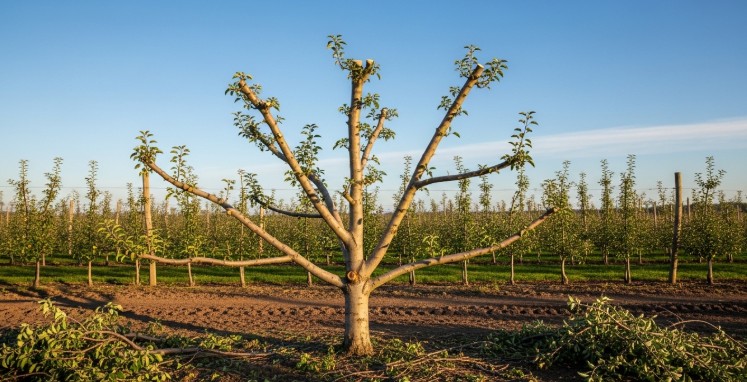
Final inspection ensures no weak limbs remain and structure aligns with diagram principles.
Tools & Equipment Used for Apple Tree Pruning
Proper apple tree pruning requires the right tools to ensure clean cuts, tree health, and operator safety. Using incorrect tools can damage bark, slow healing, and increase disease risk.
Hand pruners and bypass cutters
These are used for small branches and precise cuts close to buds or stems. Sharp bypass pruners create clean cuts that heal quickly, reducing infection risk and supporting healthy regrowth.
Loppers for thicker branches
Loppers provide extra leverage for medium-sized branches that are too thick for hand pruners. They allow controlled cutting without damaging surrounding growth.
Pole saws for high branches
Pole saws are essential for reaching higher canopy areas without climbing. They help maintain safety while pruning upper branches that affect sunlight penetration and airflow.
Safety gear and climbing equipment
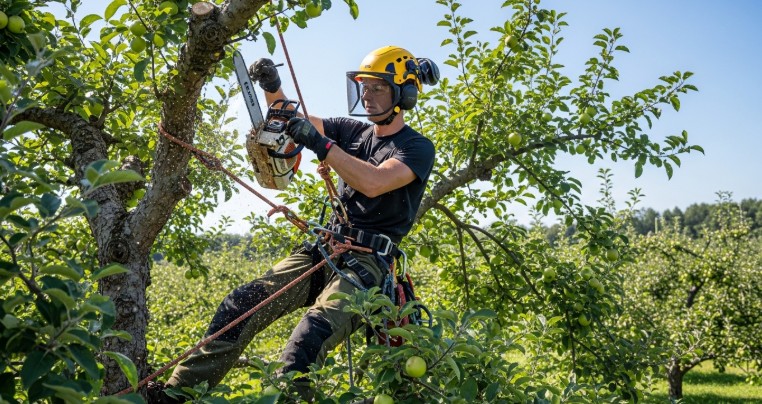
Professional pruning requires helmets, gloves, eye protection, and climbing harnesses. These tools protect against falling debris, cuts, and ladder-related accidents.
Professional arborist rigging systems
In advanced tree care, arborists use ropes, pulleys, and rigging systems to safely lower heavy branches. This prevents property damage and ensures controlled removal in tight spaces.
Safety Considerations in Apple Tree Pruning
Apple tree pruning may look simple, but it involves serious safety risks if done incorrectly. Many accidents occur when homeowners underestimate tree weight, height, and branch tension.
Ladder stability and fall risk
Improper ladder placement is one of the most common causes of injury. Uneven ground, overreaching, or unstable footing can lead to dangerous falls.
Over-cutting risks and tree stress
Removing too much canopy at once weakens the tree. This can reduce fruit production, shock the tree, and lead to long-term structural imbalance.
Electrical line hazards near trees
Branches near power lines pose a severe electrocution risk. This type of pruning should always be handled by trained professionals.
Why DIY pruning can damage structure
Incorrect cuts can lead to decay, weak regrowth, and long-term instability. Once structural damage occurs, it is often irreversible.
Cost Factors for Professional Apple Tree Pruning
The cost of professional pruning varies depending on tree condition, size, and complexity of the job.
Tree size and height
Larger trees require more labor, specialized equipment, and safety measures, increasing overall cost.
Level of overgrowth or neglect
Heavily overgrown or long-neglected trees require corrective pruning, which takes more time and expertise.
Accessibility of branches
Trees near buildings, fences, or tight spaces require careful maneuvering and additional safety precautions.
Seasonal timing (dormant vs active growth)
Winter pruning is generally more efficient and cost-effective, while emergency or off-season work can be more expensive.
Cleanup and shaping requirements
Full cleanup, hauling, and detailed shaping services may increase total pricing.
DIY vs Professional Pruning
| Factor | DIY Apple Tree Pruning | Professional Service (Spots Woods Tree Service) |
|---|---|---|
| Safety | Risk of falls and injury | Fully safety-managed arborist work |
| Tree structure | Often incorrect shaping | Correct structural pruning techniques |
| Tools | Basic garden tools | Professional arborist equipment |
| Results | Uneven fruit production | Optimized yield and canopy balance |
| Efficiency | Time-consuming | Fast and precise |
| Long-term health | Risk of permanent damage | Improved tree longevity |
Maintenance & Prevention Tips for Apple Trees
Proper maintenance reduces the need for heavy corrective pruning later and keeps trees productive year after year.
Annual pruning using structural approach
Regular pruning every dormant season helps maintain shape, improve airflow, and support consistent fruit production.
Soil nutrition and watering balance
Healthy soil strengthens root systems and improves resistance to disease and environmental stress.
Preventing overcrowding early
Early training of young trees prevents dense canopies and reduces future pruning complexity.
Monitoring pests and disease early
Regular inspection helps detect fungal infections or pests before they spread.
Structural training for young trees
Proper early shaping builds a strong central leader and reduces the risk of future branch failure.
When to Call a Professional Arborist
Some pruning situations require expert handling due to safety risks or structural complexity.
Trees too tall or unsafe to reach
Tall trees require climbing equipment and professional safety protocols.
Severe overgrowth or neglected trees
Overgrown trees need corrective pruning to restore structure and health.
Disease or structural weakness signs
Cracks, decay, or hollow branches indicate serious internal damage.
Storm damage or broken limbs
Storms often cause hidden structural weaknesses that require expert evaluation.
When precise structural pruning is needed
Diagram-based pruning requires professional understanding of tree biology and growth patterns.
At this stage, Spots Woods Tree Service can provide expert pruning based on structural accuracy, ensuring long-term safety and productivity.
FAQs About Apple Tree Pruning Diagrams
What is a pruning diagram used for?
It shows the ideal branch structure for safe and productive tree growth.
When should apple trees be pruned?
Late winter during dormancy is the best time.
Can I prune without a diagram?
Yes, but risk of improper cuts and poor structure is higher.
How much should be pruned each year?
Generally, 20–30% of growth is safe for most mature trees.
What is central leader pruning?
A system where one main trunk dominates the tree structure.
What happens if pruning is done incorrectly?
It can cause weak structure, disease, and reduced fruit production.
Do professionals use pruning diagrams?
Yes, arborists rely on structural planning for precision and safety.
Is professional pruning worth it?
Yes, especially for mature or high-value fruit trees requiring structural accuracy.