
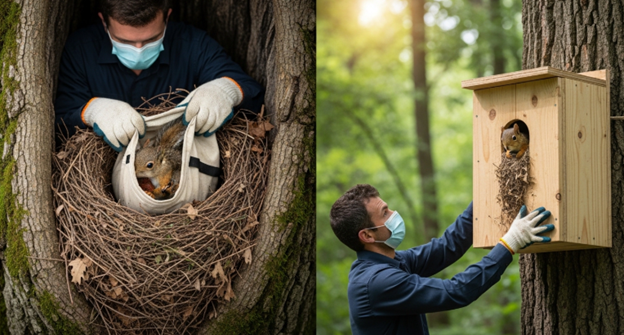
Removing a squirrel nest from a tree might seem like a simple yard task, but it’s more complex than it appears. Squirrel nests, also called dreys, are usually harmless to trees, yet their location or activity can create safety risks or property damage. Whether you’re concerned about curious squirrels entering your attic, damaging garden plants, or interfering with tree maintenance, knowing whether and how to remove a squirrel nest is essential.
In this guide, we cover every aspect of squirrel nest handling from safety considerations and step-by-step removal to alternatives and professional help so you can make informed decisions for both your property and local wildlife.
Quick Answer: Should I Remove Squirrel Nest from Tree?
Most squirrels’ nests are harmless. They are made of twigs, leaves, and bark, and they rarely damage tree structure. However, removal may be necessary if the nest:
- Poses a safety risk to people or pets
- Is located in a high-traffic area or near your home
- Causes repeated property damage
Important: Avoid removing nests with active babies, typically between February and October, as doing so can lead to mortality. If removal is necessary, relocation or professional assistance is recommended.
Key takeaway: Timing, tree health, and safety concerns should guide whether you remove, relocate, or leave the nest.
Understanding Squirrel Nests and Tree Safety
Why Squirrel Nests Are Usually Safe
- Constructed from leaves, twigs, and bark, squirrel nests rarely damage healthy trees.
- Squirrels often reuse the same nest year after year, conserving resources.
- A single nest does not overload branches, but multiple nests on weak limbs may increase the risk of breakage.
When a Nest Becomes a Problem
- Nest positioned near home entrances, play areas, or walkways.
- Nest located close to roofs, wires, or garden structures.
- Aggressive squirrel behavior affecting pets or humans.
In most cases, the nest itself is harmless, but location and interaction with humans determine whether action is necessary.
How to Remove or Relocate a Squirrel Nest Safely
Step 1 – Inspect the Nest
- Check for activity: listen for baby sounds or watch for the mother squirrel returning.
- Identify the species: tree squirrels (legal removal may vary) versus flying squirrels.
Step 2 – Choose the Right Time
- Winter months (November–January) are safest when babies are absent.
- Avoid breeding and nesting season (February–October) to prevent harming young squirrels.
Step 3 – Prepare Tools and Safety Gear
- Ladder, gloves, goggles, and a soft pruning saw.
- Cage or portable squirrel nest box if planning relocation.
Step 4 – Carefully Remove the Nest
- Use minimal force; avoid shaking or stressing the tree.
- Gently transfer the nest into a secure squirrel box or an alternate tree.
Step 5 – Monitor and Prevent Future Nests
- Install tree baffles or other deterrents to prevent squirrels from returning.
- Offer an alternative nesting box nearby to encourage relocation.
- Trim or prune dangerous branches that may pose a risk.
Methods of Handling Squirrel Nests
Leave the Nest Alone (Recommended)
- Pros: No legal issues, preserves wildlife, safe for babies.
- Cons: Squirrels remain near your property.
Relocation to Alternate Tree or Nest Box
- Pros: Protects babies, prevents property damage, humane solution.
- Cons: Requires careful handling and some equipment.
Tree Pruning or Trimming
- Remove branches supporting the nest, but only when the nest is empty.
- Pros: Reduces risk of branch breakage or property damage.
- Cons: Must be timed correctly to avoid harming babies; labor-intensive.
Professional Wildlife Assistance
- Licensed wildlife removal specialists can relocate nests safely.
- Pros: Legal compliance, stress-free, reduces risk of injury.
- Cons: May be more expensive than DIY methods.
Options for Handling Squirrel Nests
| Method | Safety for Babies | Tree Health Impact | Effort | Cost | Best For | Pros | Cons |
| Leave Nest Alone | 100% | None | Low | $0 | Most cases | Safe, no stress for squirrels | Nest remains near property |
| Relocate Nest to Box/Tree | High | None | Medium | $50–$150 | Property near home or danger zone | Protects babies, solves property issue | Requires careful handling |
| Tree Pruning (Empty Nest) | N/A | Low | Medium | $100+ | Risky branches | Reduces risk of branch damage | Must be timed, labor-intensive |
| Professional Wildlife Help | High | None | Low | $150–$300 | Active nest causing property risk | Legal, safe, stress-free | Costlier than DIY |
Safety Tips When Dealing with Squirrel Nests
- Never remove an active nest without proper precautions.
- Wear gloves and goggles to prevent scratches or bites.
- Ensure ladder safety and secure footing when climbing trees.
- Check local regulations and many areas protect wildlife during nesting season.
- Call professionals if unsure about relocation or removal.
FAQs About Should I Remove Squirrel Nest from Tree?
- Can I remove a squirrel nest myself?
Only if the nest is inactive; otherwise, professional help is safest. - When is the best time to remove a squirrel nest from a tree?
Winter months (November–January), when babies are not present. - Will removing the nest harm the tree?
No, nests rarely damage healthy trees. - How do I relocate a squirrel nest safely?
Transfer to a secure squirrel box or another tree, avoiding disturbance to babies. - What if a nest is near my house?
Install baffles or provide an alternate nest box nearby to protect property. - Are there legal restrictions on removing squirrel nests?
Yes, some states and municipalities prohibit disturbing wildlife during nesting season. - Can I prevent squirrels from nesting in certain trees?
Yes, tree baffles, pruning, and offering alternate nest boxes help control nest locations. - Do squirrels return to the same nest each year?
Often, yes; they may rebuild in the same or nearby location if conditions are favorable.
Conclusion: Final Thoughts on Removing Squirrel Nests
Removing a squirrel nest requires balancing safety, legality, and property concerns. Active nests should generally remain untouched, while relocation during winter months provides a humane and safe solution. For expert guidance and safe handling, professionals like Spots Woods Tree Service can help ensure the process is done correctly. Providing alternate nesting sites can protect both wildlife and your property.
Key takeaway: The best approach depends on nest activity, season, location, and potential property risk. When in doubt, always consult professional wildlife services to ensure compliance with local laws and protect the lives of squirrels.
Disclaimer: These guidelines are general recommendations. Local wildlife authorities or professionals should be consulted for region-specific advice.