
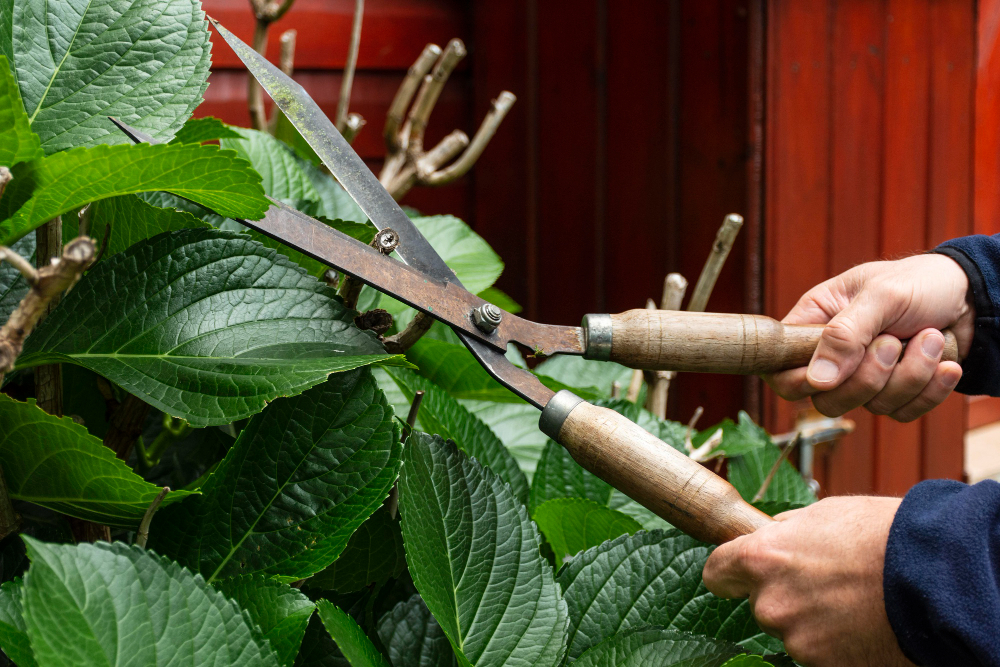
A lot of homeowners in Spanish Fort handle their own tree pruning and never have a problem. Trimming lower branches, cleaning up deadwood within reach, pulling water sprouts off the base of a tree, that kind of work is manageable for most people with basic tools and some care. But tree pruning covers a wide range, and the further you go up the tree, the more the risk picture changes. Here’s an honest look at where DIY pruning is reasonable and where it becomes a liability.
What You Can Reasonably Do Yourself
Ground-level pruning is generally low risk. If you can reach the branch from the ground or from a stable stepladder, and the branch isn’t particularly large, removing it yourself is a reasonable call. The main things to get right are the cut location and the tool condition.
Pruning cuts should be made just outside the branch collar, which is the slightly raised ring of tissue where the branch meets the trunk or parent branch. Cutting flush to the trunk removes that collar and slows the tree’s ability to seal the wound. Leaving a stub too far out is just as problematic because the stub dies back and creates a path for decay to enter the tree.
Sharp tools matter more than most people realize. A dull saw tears wood fibers rather than cutting them cleanly, and torn tissue heals more slowly and opens the door for disease and insects. Keeping your pruning tools clean and sharp is basic maintenance that makes a real difference.
Where DIY Pruning Starts to Get Risky
Working at Height
The biggest risk in DIY tree pruning isn’t the cut itself. It’s the position you have to be in to make the cut. Climbing into a tree, working from an extension ladder braced against branches, or using a pole saw at full extension while standing on something elevated introduces fall risk that increases fast once you’re more than a few feet off the ground.
Falls from trees and ladders account for a significant portion of injuries in residential tree work. Professional crews use climbing harnesses, rigging systems, and equipment that keeps them positioned safely relative to what they’re cutting. A homeowner with an extension ladder and a pole saw doesn’t have that margin.
Large or Overhanging Limbs
The other variable is the size of the limb and where it’s going to land. A small dead branch that falls into open grass isn’t a concern. A large limb over a roof, a fence, a parked vehicle, or a neighboring property is a different situation. Controlling where a large limb falls requires rigging, and rigging requires training to do without putting something at risk.
Even experienced climbers spend time planning the removal of large limbs before they make any cuts. The weight and leverage of a large branch can surprise you if you haven’t worked with wood at scale before.
The Case for a Professional Tree Pruning Service in Spanish Fort, AL
A professional tree pruning service in Spanish Fort, AL brings equipment and training that changes what’s possible on a given job. Bucket trucks and aerial lifts allow crews to work safely at height without climbing. Rigging systems let them lower large sections in a controlled way rather than letting them fall. These aren’t things you can replicate with a ladder and a hand saw.
Beyond the equipment, professional arborists understand how trees respond to different cuts and conditions. They know which species are more vulnerable to disease through pruning wounds, what time of year carries the most risk for certain trees, and how to read a tree’s structure to identify where the actual problems are. That knowledge affects the quality of the work beyond just if the cut gets made safely.
What It Costs vs. What It Prevents
Tree pruning service in Spanish Fort, AL is priced based on the size of the trees, the scope of the work, and access to the property. For a mature pine or oak, professional pruning is not cheap. But the cost of a large limb falling on a roof, a vehicle, or a person is significantly higher than any pruning estimate.
Homeowner’s insurance covers some storm and tree damage, but damage caused by a known hazard that wasn’t addressed is a different situation. If a branch was visibly dead or structurally compromised and it falls and causes damage, that’s a claim that may face scrutiny. Getting a professional to handle known hazard limbs protects you financially as well as physically.
A Reasonable Approach for Most Homeowners
The most practical approach is to divide the work based on what’s actually within your control. Ground-level pruning, deadwood removal within reach, and basic maintenance on small ornamental trees are reasonable DIY territory. Work that requires getting into the canopy of a mature tree, removing large limbs near structures, or addressing structural issues in an established tree belongs with a professional.
Getting a professional assessment every few years is also worth considering even if you’re handling routine maintenance yourself. An arborist walking your property can identify things you might not notice: crossing branches developing inside the canopy, signs of disease or insect activity, structural issues in the trunk or major limbs. Catching those early costs far less than addressing them after they’ve developed into a real problem.
Tree pruning in Spanish Fort, AL doesn’t have to be all or nothing. Know what you can do safely, and bring in a crew for the rest. That’s the approach that keeps both the trees and the people working on them in good shape.