
Short Answer
Trimming a palm tree trunk involves carefully removing dead fronds, excess shoots, or growth while maintaining the tree’s health. Proper tools, safety precautions, and gradual trimming prevent damage. Understanding these techniques helps homeowners, gardeners, and landscapers enhance palm aesthetics, reduce disease risks, and maintain a safe landscape.
Quick Summary / Key Takeaways
- Only remove dead, dying, or damaged fronds to protect the tree’s health.
- Use the correct pruning tools: pole saws, pruning saws, gloves, and ladders.
- Avoid over-trimming, which can weaken the trunk and reduce nutrient storage.
- Safety is critical: always wear protective gear and stabilize ladders.
- Trimming improves the palm’s appearance and reduces pest or disease risks.
- Professional help is recommended for tall or hard-to-reach palms.
Introduction
Palm trees are iconic in landscapes, but their trunks can quickly become cluttered with dead fronds, suckers, and excess growth. Homeowners, gardeners, and landscapers often ask: how to trim palm tree trunk safely and effectively? Proper trimming promotes tree health, prevents pest infestations, reduces storm damage hazards, and improves visual appeal.
This guide covers every aspect of trimming: from tools and step-by-step methods to safety precautions, common mistakes, and pro tips. Whether you’re maintaining a backyard palm or managing a commercial landscape, following these guidelines ensures safe, efficient, and eco-conscious palm care.
What Does It Mean to Trim a Palm Tree Trunk?
Trimming a palm tree trunk means selectively removing dead, damaged, or excess fronds, shoots, or suckers along the trunk. Unlike crown cleaning, which focuses on the canopy, trunk trimming maintains the trunk’s health and structural integrity.
Benefits of trimming:
- Prevents disease and pest buildup on dead fronds.
- Enhances sunlight and airflow through the canopy.
- Improves aesthetics with a clean, uniform trunk.
Limitations:
- Over-trimming can weaken the palm and reduce nutrient storage.
- Excessive removal of green fronds may slow growth.
Why Trimming a Palm Tree Trunk Is Important
Biological & Structural Reasons
- Dead fronds and shoots harbor pests and fungi.
- Excess fronds can stress the trunk and root system.
- Proper trimming allows airflow, reducing fungal infections.
Environmental & Safety Considerations
- Storm preparedness: heavy fronds can fall and cause damage.
- Landscape aesthetics: evenly trimmed trunks enhance property value.
- Injury prevention: reducing loose fronds minimizes tripping or falling hazards.
Who Is This For?
- Homeowners maintaining backyard palms.
- Professional landscapers and arborists managing multiple trees.
- Gardeners managing small commercial or residential landscapes.
- Eco-conscious individuals aiming to protect tree health safely.
How to Trim Palm Tree Trunk
- Assess the Tree – Identify dead fronds, shoots, or suckers; measure trunk height.
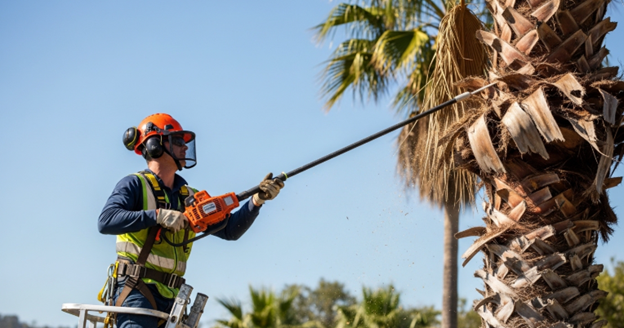
- Gather Tools and Safety Gear – Use pole saws, pruning saws, gloves, goggles, ladders, and harnesses for tall palms.
- Clear the Area – Remove obstacles and mark a safety zone to protect people and property.
- Trim Dead or Hanging Fronds – Start at the bottom, cut close to the trunk using proper angles.
- Remove Suckers and Excess Shoots – Prevent congestion along the trunk and maintain airflow.
- Inspect for Disease or Pests – Remove infected fronds carefully and apply treatment if necessary.
- Clean Tools and Dispose of Debris – Mulch trimmed fronds or compost them to prevent disease spread.
Tools and Materials Needed
- Pole pruner or pruning saw
- Hand saw or pruning shears
- Ladder or aerial lift for tall palms
- Safety harness, gloves, and protective eyewear
- Mulch, compost, or garden debris bags
DIY vs Professional Palm Trimming
| Method | Effort | Cost | Time | Equipment Needed | Best For |
| DIY Trimming | Medium | Low | 1–3 hrs | Pruning saw, ladder | Small–medium palms, low height |
| Professional Service | Low | Medium–High | 1 hr | Commercial lifts, safety gear | Tall palms, large properties |
| Mechanical Lift Rental | Medium | Medium | 1–2 hrs | Lift rental, pruning saw | Hard-to-reach palms, DIY access |
Common Mistakes When Trimming Palm Trees
- Cutting green fronds excessively, weakening the palm.
- Neglecting safety gear or stabilizing ladders improperly.
- Using dull or inappropriate cutting tools.
- Removing too many fronds at once, stressing the tree.
- Ignoring pests or disease signs on the trunk.
Pro Tips / Expert Insights
- Trim gradually; avoid over-pruning.
- Cut fronds close to the trunk base for clean removal.
- Apply pruning oil or fungicide on infected cuts if needed.
- Hire certified arborists, like Spots Woods Tree Service, for palms taller than 15–20 feet.
- Inspect trees regularly to reduce long-term maintenance.
Latest Trends & Updates (2025–2026)
- Eco-friendly pruning techniques minimize chemical use.
- Drone inspections for monitoring trunk and frond health.
- Ergonomic and extendable pole pruners reduce fatigue.
- Integration of palm trimming in sustainable urban landscaping programs.
People Also Ask
- How often should I trim my palm tree trunk?
- Can I trim green fronds safely?
- What is the best season for palm trimming?
- Are there risks to trimming palm trunks?
- Can pests damage palms if I don’t trim?
- How do professionals trim tall palm trees?
- Can chemical treatments be used safely while trimming?
- How do I maintain trimmed fronds?
FAQs
How to trim palm tree trunk safely?
Use proper tools, wear gloves and eyewear, and remove only dead or excess fronds gradually.
Can I trim green fronds?
Only if necessary; excessive removal can harm tree health.
Which tools are best for palm trunk trimming?
Pole saws, pruning saws, gloves, and protective eyewear are recommended.
How often should a palm tree trunk be trimmed?
Usually 1–2 times per year, depending on growth and species.
Are there eco-friendly trimming methods?
Yes, manual pruning, composting fronds, and minimal chemical use preserve the environment.
Can pests affect trimming outcomes?
Yes, inspect trunks for beetles, fungi, or pests before trimming.
Should I hire a professional for tall palms?
Highly recommended for palms over 15–20 feet to ensure safety.
Can trimmed fronds be reused?
Yes, as mulch, compost, or decorative landscaping elements.
Conclusion
Trimming a palm tree trunk is essential for maintaining tree health, safety, and aesthetics. By following proper techniques, using the right tools, and practicing safety precautions, homeowners and landscapers can maintain palms effectively. Regular inspection, careful trimming, and mindful pruning reduce pest and disease risks while creating a visually appealing landscape.