
Short Answer
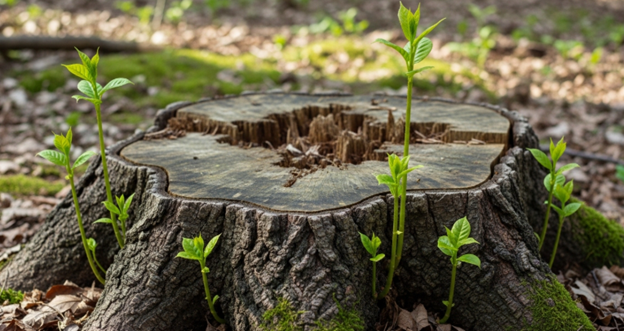
Yes, certain trees can grow back from a stump through a process called coppicing or natural regrowth. Factors like tree species, stump health, root condition, and environmental conditions determine regrowth success. Understanding how stumps regenerate helps homeowners, gardeners, and landscapers manage unwanted sprouts or encourage new growth safely and effectively, according to Spots Woods Tree Service.
Quick Summary / Key Takeaways
- Some species naturally sprout from stumps (maple, willow, poplar).
- Healthy roots and untreated stumps increase regrowth likelihood.
- Environmental conditions like sunlight, soil quality, and moisture play a key role.
- Coppicing can be used for controlled regrowth or periodic harvesting.
- Unmanaged stump sprouts may require removal to prevent crowding.
- Professional assessment can guide decisions for landscape planning.
Introduction
Leftover tree stumps often prompt questions like, “Can a tree grow back from a stump?” Homeowners may notice sprouts emerging months after cutting a tree, which can be either a nuisance or an opportunity. Understanding stump regrowth is essential for planning landscaping, saving costs, and encouraging ecological benefits.
This guide explores which trees naturally regrow, the biological mechanisms behind stump sprouts, environmental factors influencing regrowth, and step-by-step methods to either encourage or prevent sprouting. It also covers tips for managing regrowth safely, emerging trends, and best practices for DIY and professional gardeners.
What Does It Mean for a Tree to Grow Back from a Stump?
Definition: Stump sprouting occurs when dormant buds on a cut trunk generate new shoots. This process allows trees to regenerate from their existing root system without the need for new seeds.
Types of regrowth:
- Root suckers: New shoots emerge from roots rather than the stump.
- Stump sprouts: Shoots grow directly from the cut trunk.
- Seedlings: New trees grown from seeds, independent of the original stump.
Natural vs managed regrowth: Natural regrowth helps maintain forest density and biodiversity, whereas managed regrowth, such as coppicing, allows gardeners and landscapers to control size, growth pattern, and appearance.
Why Can a Tree Grow Back from a Stump?
Biological Mechanisms Behind Stump Regrowth (H3)
- Dormant buds and meristematic tissue: Specialized growth cells in the stump can activate and form new shoots.
- Stored energy in roots and trunk: Nutrient reserves fuel sprout development.
- Hormonal triggers: Auxins and cytokinins in the stump control growth direction and shoot formation.
Environmental Factors Influencing Regrowth (H3)
- Sunlight exposure: Adequate light is necessary for photosynthesis and shoot growth.
- Soil fertility: Nutrient-rich soils support faster sprout development.
- Moisture levels and seasonal timing: Moderate water availability encourages sprouting, while extreme dryness or frost may inhibit growth.
- Root system size and health: Larger, healthy roots increase regrowth success.
Who Is This For?
- Homeowners noticing unwanted stump sprouts.
- Gardeners exploring coppicing or regenerative landscaping.
- Arborists and landscapers managing tree populations.
- Eco-conscious individuals looking to reuse stumps sustainably.
Encouraging or Preventing Stump Regrowth
- Inspect the stump: Identify tree species and overall health.
- Decide your goal: Encourage regrowth for coppicing or prevent sprouts to maintain aesthetics.
- For regrowth: Cut stump at proper height, protect roots, and water adequately.
- For suppression: Apply eco-friendly herbicides or regularly remove new sprouts.
- Monitor and maintain soil health: Fertile, well-draining soil supports or limits growth as needed.
- Optional creative use: Integrate sprouting stumps into garden art, planters, or woodcraft projects.
Stump Regrowth vs Stump Removal
| Method | Effort | Cost | Time | Outcome | Best For |
| Allow Natural Regrowth | Medium | Low | Months–Years | New shoots from stump | Eco-conscious or coppicing |
| Stump Grinding / Removal | High | Medium–High | Hours–Days | No regrowth | Landscapers or prevention |
| Chemical Suppression | Low | Low | Weeks | Stops sprouts | Homeowners avoiding regrowth |
Common Mistakes When Managing Stump Regrowth
- Ignoring species prone to aggressive sprouting.
- Failing to remove competing sprouts when suppression is desired.
- Cutting stumps too low or unevenly for successful coppicing.
- Neglecting soil or root care during regrowth management.
- Applying chemicals incorrectly, potentially harming nearby plants.
Pro Tips / Expert Insights
- Identify species before cutting: some trees like maple and willow sprout aggressively, while oaks and pines rarely do.
- Control regrowth height and spacing for aesthetic gardens.
- Mulch around stumps to reduce unwanted sprouts.
- Consider eco-friendly herbicides if suppression is necessary.
- Consult professional arborists for large or high-value trees to ensure safe regrowth management.
People Also Ask
- Can a tree grow back from a stump naturally?
- Which tree species regrow from stumps fastest?
- How long does stump regrowth take?
- Can I prevent a stump from sprouting?
- Is stump coppicing beneficial for gardens?
- How do I maintain regrown sprouts safely?
- Do stump sprouts affect neighboring plants?
- Can a stump grow back after chemical treatment?
FAQs
Can a tree grow back from a stump?
Yes, many tree species can regenerate from dormant buds on a healthy stump. Proper care and environmental conditions boost success.
How do I encourage a stump to regrow?
Which trees are most likely to sprout from a stump?
Can stump sprouts be used for landscaping projects?
How do I stop unwanted stump regrowth?
How long until new shoots appear?
Is regrowth from a stump stronger than seedlings?
Conclusion
Understanding stump regrowth helps homeowners, gardeners, and landscapers make informed decisions. Some trees naturally sprout, while others do not, and species, stump condition, and environment influence success. Proper management allows for either controlled regrowth or suppression. Knowledge of stump biology supports safe, eco-friendly, and visually appealing outcomes in any garden or landscape.